Lake Kivu Rwanda: Why You Should Add It to Your Safari Itinerary
What Is Lake Kivu and Where Does It Sit in Rwanda?
Let’s start with geography, because Lake Kivu is not the kind of lake you stumble past on a game drive. It demands some context.
Lake Kivu sits along the western border of Rwanda, forming a natural boundary between the country and the Democratic Republic of Congo. It stretches approximately 90 kilometres from north to south and reaches around 50 kilometres at its widest point. At an altitude of 1,460 metres above sea level.The lake sits higher than most people expect, and that elevation gives it a climate that feels less East African than almost Mediterranean: mild days, cool evenings, air that carries none of the heavy humidity you find at lower altitudes.
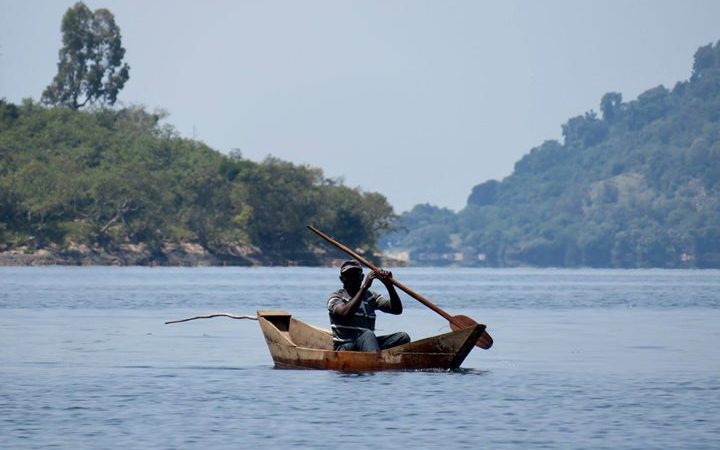
The lake is one of Africa’s Great Rift Valley Lakes. Part of the same ancient geological chain as Lake Tanganyika, Lake Malawi, and Lake Victoria. It’s the sixth largest lake on the continent. But what makes it feel different from its more famous siblings isn’t its size. The intimacy of the landscape that surrounds it. On the Rwandan shore, the hills press in close, terraced with cultivation right down to the water’s edge. You are never far from a fishing boat being dragged up the sand, a village perched on a headland, or a hillside so perfectly tiered it looks sculpted by hand.
Beneath that beauty, Lake Kivu holds an extraordinary geological secret: it sits above massive reservoirs of dissolved methane and carbon dioxide, the result of volcanic activity beneath the lake bed. This has made it the subject of serious scientific interest for decades. Rwanda is now actively extracting the methane gas to generate electricity. A genuinely remarkable engineering story that your guide will be happy to explain if you’re curious.
The main towns along Rwanda’s shore, from north to south, are:
- Rubavu (historically known as Gisenyi): the northern gateway, closest to Volcanoes National Park and the most accessible for safari travellers coming from the gorilla trekking area
- Karongi (historically known as Kibuye): the quieter midpoint of the lake, widely regarded as the most beautiful section of the Rwandan shore
- Rusizi (historically known as Cyangugu): the southern end, sitting at the DRC border and serving as the natural gateway to Nyungwe Forest National Park
Why Lake Kivu Rwanda Makes Perfect Strategic Sense on a Safari Itinerary
Here is the practical argument, because the emotional one is easy, the lake is beautiful, everyone who visits it loves it, end of story. But beauty alone doesn’t always justify a detour. Lake Kivu does, for a reason that goes beyond aesthetics.
Rwanda’s three main safari parks, Volcanoes National Park in the north, Nyungwe Forest National Park in the southwest, and Akagera National Park in the east, form a rough triangle across the country. If you are combining two or more of these parks in a single Rwanda safari itinerary. During your travels between Volcanoes and Nyungwe, you will pass very close to Lake Kivu, regardless.
The choice is this: take the faster, more direct internal road from Musanze southeast toward Kigali and then west again to Nyungwe. You spend several hours watching tarmac pass outside the window. Travel west from Musanze to the northern lake shore at Rubavu. Drive south along one of the most beautiful roads in the country. Literally along the water’s edge for long stretches, and arrive at Nyungwe from the west via Rusizi, having spent a night or two on the lake along the way.
Same parks. Very similar total travel time. Completely different experience.
That’s the elegance of including Lake Kivu Rwanda in your safari itinerary. It costs you almost nothing in additional days, and it gives you one of the most memorable interludes of the entire trip.
The Three Shores of Lake Kivu Rwanda: A Town-by-Town Guide
Rubavu (Gisenyi): The Lively Northern Gateway to Lake Kivu
Rubavu: Most Rwandans and older maps still call it Gisenyi, is the first point of contact with Lake Kivu for most safari travellers, and it makes an immediately powerful first impression.
The drive from Musanze takes around one hour along a winding, well-maintained road that cuts west through Rwanda’s northern highlands. The Virunga volcanoes stay visible on your right for much of the journey. This distinctive silhouette of five peaks lined up along the horizon, until the road dips toward the lake and suddenly. Unexpectedly, you are looking at an enormous expanse of blue water that seems to have no business existing in a landlocked country full of hills.
Rubavu is a border town, and it has that characteristic energy: busy, multicultural, and slightly frantic in a way that feels alive rather than chaotic. The DRC city of Goma sits directly across the crossing. From here, you can see its buildings from the lakefront, and the commercial and social exchange between the two communities gives Rubavu a cosmopolitan edge that surprises first-time visitors. But the lakefront itself is the thing. A long sweep of sandy beach runs along the northern shore, palm trees leaning casually over the water, local fishing pirogues pulled up on the sand between visitors’ kayaks. At one end of the beach, a fish market operates through the cool early morning hours in a spectacle of colour, noise, and scale. At the other, small restaurants and guesthouses face the water with terraces designed, quite specifically, for sitting and staring.
Sunset in Rubavu is extraordinary. On clear evenings, and there are many, especially in the dry season, the Nyiragongo volcano on the Congo side of the border is visible across the water, its distinctive conical shape softened by distance and haze. Nyiragongo is an active volcano with a lava lake at its summit, and on nights when it’s particularly active, some travellers report seeing a faint red glow on the horizon. It is, by any measure, a remarkable thing to watch from a terrace with a drink.
What to do in Rubavu:
- Morning swim at the beach before the day heats up, the water is clean, cool, and wonderfully calm
- Kayak rental from the main beach, paddling north along the shore or out toward the nearest islands
- Walk the lakefront promenade from the beach toward the DRC border crossing, the people-watching is excellent
- Visit the fish market in the early morning (before 7am) for a window into daily life that no tourist brochure quite prepares you for
- Boat trip to the islands just offshore, your hotel or guesthouse can arrange this easily
Where to stay in Rubavu: The Serena Hotel Kivu is the most comfortable option with a private beach and excellent lake-facing rooms. Paradis Malahide is a charming mid-range choice with character. For budget travellers, a number of small guesthouses along the main beach road offer clean rooms with lake views at very reasonable prices.
Karongi (Kibuye): The Most Beautiful Place on Lake Kivu Rwanda’s Shore
Karongi, many Rwandans still use the old name Kibuye, and both names appear on signs along the route. This is approximately two and a half hours south of Rubavu along the lake shore road. The journey itself is among the finest drives in Rwanda: narrow, sinuous, pressing close to the water on one side and the terraced hills on the other, passing through small towns, over headlands with sudden panoramic views, and alongside stretches of the lake so still and reflective they look like polished glass.
Karongi sits on a series of peninsulas that jut into the lake, and the geography creates a landscape of extraordinary visual complexity. Islands cluster offshore. Hills press in from three sides. The water changes colour through the day, pale silver at dawn, deep blue at midday, hammered copper in the last light of afternoon. If you stand on the terrace of your lodge at any hour of the day and fail to be moved by what you see, you may need to consider whether you are, in fact, still alive.
I am not being dramatic. Karongi is genuinely one of the most beautiful places in all of East Africa, and most people who’ve never been to Rwanda have never heard of it.
What to do in Karongi: Napoleon Island boat trip: This is the experience that defines Karongi for most visitors. A short boat ride from the main jetty brings you to Napoleon Island, a small forested outcrop that is home to one of Rwanda’s most extraordinary natural spectacles: a vast colony of straw-coloured fruit bats, tens of thousands of them, roosting in the trees through the day, and rising in a massive, disorienting cloud at dusk. The island is also a nesting ground for thousands of open-billed storks, herons, and cormorants. Standing on the boat as the bats rise is one of those experiences that is impossible to describe adequately in advance. You’ll understand when it happens.
Island-hopping by kayak or boat: Beyond Napoleon Island, the waters around Karongi are scattered with small islands, some forested and uninhabited, others home to small fishing communities. A full-day boat trip with a local captain can take you to several of these, with stops for swimming, short forest walks, and visits to fishing families who have lived on these islands for generations.
Cycling the shoreline: Several lodges offer bicycle hire, and the roads around Karongi, quiet, winding, and spectacularly scenic, are among the best cycling routes in Rwanda. A morning ride through the fishing villages north of town, with the lake flashing blue between the trees and children calling out greetings from the roadside, is something you’ll carry home with you.
Sunset boat cruise: Ask your lodge to arrange one. Ask any lodge. Ask a stranger on the street if necessary. A Lake Kivu sundowner cruise is one of the finest hour-and-a-half investments you can make on a Rwanda safari, and Karongi is the best place to do it. The combination of that light, that water, those hills, and whatever cold drink you have in your hand as the sun hits the Congo mountains, it’s the kind of moment you stop trying to photograph because no photograph will do it justice.
Hiking the surrounding hills: The hills above Karongi offer hiking routes with increasingly staggering views of the lake below. Your lodge can arrange a local guide for half-day or full-day walks through the villages and tea plantations above the shoreline.
Where to stay in Karongi: Cormoran Lodge sits right on the water with a private beach and wooden bungalows that feel genuinely romantic without being pretentious. Home St Jean is a popular mid-range choice with helpful staff and great food. For travellers on tighter budgets, the town centre guesthouses are clean and friendly with easy walking access to the main jetty.
Rusizi (Cyangugu): Lake Kivu’s Quiet Southern End and Gateway to Nyungwe
Rusizi is the least visited of Lake Kivu’s main towns, and that is entirely its charm.
Where Rubavu has energy and Karongi has grandeur, Rusizi has a kind of unhurried authenticity that comes from simply not having been discovered yet by the safari circuit. The town is small, the lakefront is quiet, and the daily rhythm, fishing, trading, the school run, the afternoon market, continues without much reference to the handful of tourists who pass through.
The landscape at the southern end of the lake is different from the north: the hills flatten slightly. The lake narrows, and the point where Lake Kivu drains south into the Rusizi River becomes visible. That river flows through a narrow valley past the Rusizi National Park, home to hippos and Nile crocodiles, before eventually reaching Lake Tanganyika far to the south.
For safari travellers, Rusizi serves primarily as the southern gateway. From here, the road turns east into the mountains and reaches the entrance of Nyungwe Forest National Park in under an hour. Spending a night in Rusizi before an early-morning chimpanzee trek in Nyungwe. This makes for a very satisfying and natural end to a Lake Kivu chapter.
Lake Kivu Rwanda Experiences You Will Not Find Anywhere Else on Your Safari
Birdwatching on Lake Kivu Rwanda: A Hidden Safari Gem
Rwanda is one of Africa’s most rewarding birdwatching destinations, and Lake Kivu contributes disproportionately to that story. The combination of open water, forested islands, papyrus wetland fringing, and the montane forest of the surrounding hills creates a mosaic of habitats that supports an extraordinary range of bird species.
A dedicated half-day boat trip with a local birding guide from either Rubavu or Karongi can realistically produce 60 to 80 species. That’s a conservative estimate in the right season. The lake’s endemic and near-endemic papyrus specialists are the particular draw for serious listers. Plus the sheer abundance of more familiar species is remarkable in itself.
Key species to look for on Lake Kivu Rwanda:
- African fish eagle: The resonant, spiralling call of this bird over open water is one of Africa’s most iconic sounds, and Lake Kivu is excellent habitat for it
- Malachite kingfisher: Jewel-bright and fast, darting low over the water’s surface along the reed-fringed shores
- Giant kingfisher: The largest kingfisher on the continent, frequently perching on exposed branches overhanging the lake edge and diving with spectacular precision
- African open-billed stork, Nesting in enormous colonies on Napoleon Island and several other islands around Karongi
- Papyrus gonolek, A striking papyrus specialist found in the wetland margins; difficult to see but memorable once located
- Grey crowned crane: Rwanda’s national bird, seen in the agricultural areas surrounding the lake shore
- African crowned eagle : soaring over the forested hills above the western shore, hunting in the forest canopy below
For birders combining Lake Kivu with Nyungwe Forest, where over 300 species have been recorded, including 29 Albertine Rift endemics, the combined species list for a single Rwanda safari can exceed 200 birds without much effort.
Swimming and Water Sports on Lake Kivu Rwanda
Here is something that surprises almost every visitor: Lake Kivu is one of the safest and most enjoyable swimming lakes in Africa.
There are no crocodiles in the open lake. There are no hippos in the swimming areas along the Rwandan shore. Bilharzia, the parasitic infection that makes swimming in many East African lakes inadvisable. This is not considered a significant risk in Kivu’s deep, open waters. The waters are too cold and too deep to support the snail populations that carry the parasite. The lake is clean. The water is clear. At 1,460 metres above sea level, it is cooler than most East African lakes, refreshing on a warm afternoon, bracing in the early morning.
The beaches at Rubavu and Karongi are gentle and sandy, rarely crowded. They are oriented to catch the best of the morning and afternoon light. Most lodges provide basic beach facilities, chairs, shade, towels, and kayak rental is widely available at both locations.
For visitors who have spent the preceding days hiking through mountain forest on gorilla or chimpanzee treks. An afternoon floating in Lake Kivu is one of the most welcome physical experiences imaginable.
The Cultural Life of the Lake Kivu Rwanda Shoreline
One of the things that makes Lake Kivu so distinctive as a safari destination. Which is the human story woven through every kilometre of its shore. This lake has supported fishing communities for centuries. Long before the colonial period, long before Rwanda became a tourist destination, and the rhythms of that life are still entirely visible.
Watching the fishing pirogues set out before dawn with lanterns. Once you happen to be awake for it, a quietly stunning sight. The lights moving in slow procession across the black water. This grows smaller as the boats spread across the lake. Going further until the eastern hills begin to pale with the first light and you realise you’ve been standing on the terrace for forty minutes.
The morning fish markets, most active between 6 and 9am, are a riot of colour, noise, and commerce. Tilapia, Nile perch, and the small dagaa fish that are sun-dried and sold throughout the region change hands rapidly, and the social fabric of the lakeside communities is entirely visible in the way people move and talk and negotiate in these spaces.
Several operators along the lake offer formal cultural experiences and community visits. Introductions to fishing families, demonstrations of traditional boat-building. The visits to women’s cooperatives producing Rwanda’s famous woven baskets. Then encounters with the small-scale farmers who work the terraced hillsides above the shore. These experiences are genuine rather than staged, and they add a depth to the Lake Kivu visit that purely natural experiences cannot provide on their own.
Getting to Lake Kivu Rwanda: Routes and Logistics
From Volcanoes National Park (North)
The most common approach for safari travellers is from Volcanoes National Park via Musanze. The road west from Musanze to Rubavu takes approximately 1 to 1.5 hours and is well-maintained throughout. It goes through the lush northwestern highlands with the Virunga volcanoes visible to the north.
From Kigali (East)
Kigali to Rubavu is approximately 2.5 to 3 hours by road on a good tarmac highway that passes through Musanze. It’s a straightforward and scenic drive that most private transfer drivers know well.
From Nyungwe (South)
Rusizi at the southern end of the lake is under one hour from the Nyungwe Forest National Park entrance. This makes the lake a natural stop whether you’re approaching Nyungwe or departing it.
Along the Lake Shore (North to South)
The shoreline road between Rubavu and Rusizi is worth treating as a destination in itself. It is narrow, winding, and follows the water closely for long stretches. Going past fishing villages, over rocky headlands, through forested sections where the lake disappears and then reappears suddenly around a bend. Allow more time than the map suggests. You will want to stop.
| Stretch | Approximate Drive Time |
| Musanze to Rubavu | 1–1.5 hours |
| Kigali to Rubavu | 2.5–3 hours |
| Rubavu to Karongi | 2.5 hours |
| Karongi to Rusizi | 1.5 hours |
| Rusizi to Nyungwe Forest entrance | Under 1 hour |
How Many Days Should You Spend at Lake Kivu Rwanda?
This depends on your overall itinerary length and what else you’re combining, but here are honest recommendations:
| Duration | What It Gets You |
| 1 night | Arrival, sunset cruise or swim, morning departure. Useful as a transit stop and genuinely restorative, but you’ll leave wishing you had more time. |
| 2 nights | The minimum for a real Lake Kivu experience. Time for a boat trip, a full day of activities, a sundowner cruise, and a relaxed morning. Split between Rubavu and Karongi if possible. |
| 3 nights | The ideal. Full exploration of the lake, Napoleon Island, island-hopping, cycling, birdwatching, a cultural visit. You leave feeling genuinely renewed. |
Most of the Rwanda safari itineraries built by our team at Africa Safaris Tours. Include two nights at Lake Kivu as a minimum, and we always recommend splitting those nights between Rubavu and Karongi to experience both the northern energy and the southern beauty of the lake.
Lake Kivu Rwanda Costs: What to Budget
Lake Kivu is one of the most affordable components of a Rwanda safari itinerary. A genuine relief after the significant cost of gorilla trekking permits and high-end forest lodges.
| Expense | Approximate Cost Per Person |
| Budget guesthouse (per night) | $30–$70 |
| Mid-range lodge (per night) | $80–$200 |
| Luxury lodge (per night) | $250–$500 |
| Half-day boat trip to islands | $30–$60 |
| Full-day island-hopping boat | $80–$120 |
| Kayak rental (per day) | $15–$25 |
| Sundowner cruise (1.5–2 hours) | $20–$40 |
| Napoleon Island bat trip | $25–$45 |
| Guided birdwatching (half day) | $30–$60 |
| Cultural village visit | $20–$40 |
| Cycling (bike hire per day) | $10–$20 |
| Meals at mid-range restaurants | $10–$25 per meal |
Two nights at Lake Kivu, including activities, typically adds $250 to $450 per person to a total safari budget. For what you receive in return, the scenery, the experiences, the complete change of pace, this is exceptional value, and most travellers consider it among the best money spent on their entire Rwanda trip.
Is Lake Kivu Rwanda Safe to Visit?
Yes, clearly and confidently.
Rwanda consistently ranks among the safest countries in Africa for international visitors, and Lake Kivu’s Rwandan shore reflects that. The towns are well-policed, the roads are in good condition, and the local communities around the lake are accustomed to tourists and welcoming of them.
A few specific points worth addressing:
The DRC border: The crossing at Rubavu (Gisenyi) and Rusizi is active, commercially important, and entirely normal to see and walk past. However, travel into the Democratic Republic of Congo is not recommended for tourists without expert local guidance and up-to-date security information. The security situation in eastern DRC can change quickly. Stay on the Rwandan side of the lake and enjoy the Congo views from a safe distance.
Swimming safety: As noted above, Lake Kivu is among the safest swimming lakes in East Africa. No crocodiles or hippos in the open water or tourist swimming areas, and bilharzia risk is considered low in the deep, open lake. Your lodge will advise you on the best local swimming spots. Volcanic activity: The Nyiragongo volcano across the DRC border is an active volcano and has erupted relatively recently (2021). It is monitored continuously. Volcanic activity in the region does not generally affect the safety of travel on the Rwandan shore of Lake Kivu, but it is worth checking current advisories before travel and discussing any concerns with your operator