Birding in Rwanda: Why Akagera Is One of Africa’s Best Bird watching Destinations
The boat barely made a sound.
We had pushed out onto Lake Ihema before the sun had fully risen, the papyrus towering above us on both sides, the air thick with mist and the calls of birds I hadn’t yet learned to place. My guide raised a hand. Stopped paddling. Pointed.
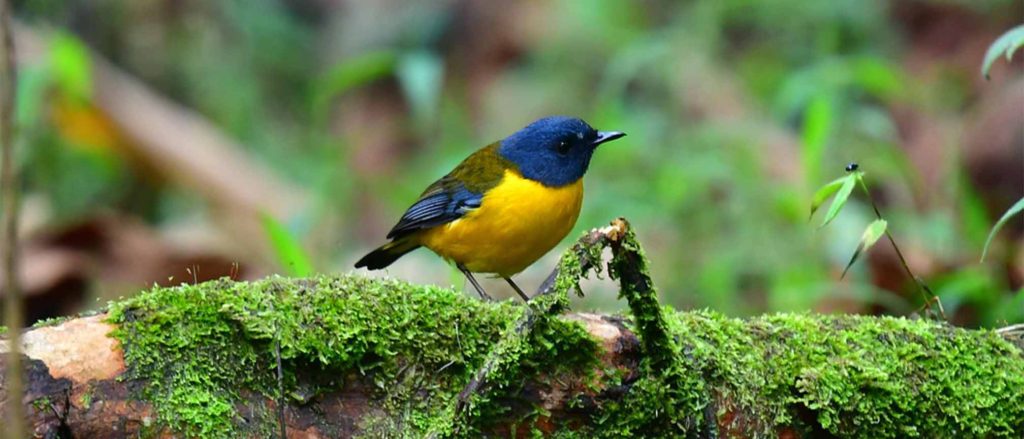
There it was. Standing absolutely motionless at the edge of the reeds, over a metre tall, grey and prehistoric and utterly surreal, a Shoebill Stork staring back at us with the expression of something that had existed long before humans arrived and intended to exist long after we were gone.
I’d been birding in Rwanda for four days at that point. And I already knew I’d come back.
Rwanda does not get the birding attention it deserves. Most visitors arrive for the gorillas, and the gorillas are extraordinary. But the birdlife here, across three completely distinct ecosystems packed into a country smaller than Maryland, is among the finest in East Africa. For birders, Rwanda is a revelation.
Why Birding in Rwanda Belongs on Every Serious Birder’s List
Let’s start with a number that puts everything in context: over 700 bird species have been recorded in Rwanda.
For a country of just 26,000 square kilometres, roughly the size of Wales, that is a staggering figure. It reflects Rwanda’s extraordinary ecological position at the meeting point of East and Central African avifauna, where species from both zones overlap in habitats that range from open savannah and papyrus wetlands to ancient montane rainforest and high volcanic slopes.
Rwanda sits squarely within the Albertine Rift biodiversity hotspot, one of the most species-rich ecosystems on the entire African continent. This rift valley, running along Rwanda’s western border, supports dozens of bird species found nowhere else on earth, and several of the finest birding sites in the region lie within Rwanda’s national parks.
What makes birding in Rwanda uniquely compelling is the sheer diversity of habitats accessible in a single short trip:
- Akagera National Park in the east, savannah, woodland, lakes, and papyrus swamps with over 525 species
- Nyungwe Forest National Park in the southwest, ancient montane rainforest with 29 Albertine Rift endemics
- Volcanoes National Park in the northwest, high-altitude Virunga forest with rare highland specialists
Three completely different birding experiences. One small country. One week of travel.
And that’s before you factor in the gorillas, chimpanzees, and big game that make Rwanda so much more than just a birding destination.
Birding in Akagera National Park: Rwanda’s Premier Birdwatching Destination
If you only visit one birding site in Rwanda, make it Akagera.
Why Akagera Is East Africa’s Most Underrated Birding Hotspot
Akagera National Park sits in eastern Rwanda along the Tanzanian border, covering 1,120 square kilometres of savannah, open woodland, rolling hills, and one of the most remarkable wetland systems in the region, a chain of lakes and papyrus swamps along the park’s eastern boundary that supports birdlife of extraordinary abundance and diversity.
With over 525 bird species recorded, Akagera has one of the highest single-park bird counts in all of East Africa. And yet it remains largely unknown to the international birding community, which means that when you arrive, you often have the lakes almost entirely to yourself.
The park has undergone a dramatic conservation revival over the past decade. Lions and rhinos were reintroduced, elephant populations have grown, and the ecosystem is recovering with a vitality that is visible in the birdlife. The wetlands along Lake Ihema, the park’s largest lake, are among the finest Shoebill habitat remaining in East Africa, and the papyrus edges host an array of range-restricted species that can’t be reliably found anywhere else in Rwanda.
The Shoebill: The Bird That Justifies the Journey
I want to tell you honestly what it feels like to see a Shoebill for the first time.
It doesn’t look real. That is the only way I can describe it. The massive, prehistoric bill, broad and hooked and vaguely boat-shaped, belongs on a creature from a natural history museum exhibit, not standing three metres away from your boat in the morning mist. Balaeniceps rex, literally “king of the whale-heads”, is one of the most extraordinary birds on the planet, and Akagera gives you a genuine, reliable chance of finding one.
The best approach is by boat on Lake Ihema, departing at first light before the heat haze builds and the birds retreat deeper into the reeds. A good guide will navigate the papyrus channels quietly, reading the habitat, stopping at the most likely spots, and waiting with the patience that Shoebill watching always requires.
When it appears, standing motionless at the reed edge, watching you with those unsettling yellow eyes, the silence in the boat is instinctive. Nobody speaks. Nobody needs to.
Other papyrus specialists to watch for alongside the Shoebill:
- Papyrus Gonolek, a stunning black-and-red range-restricted species found almost exclusively in papyrus
- White-winged Warbler, tiny, secretive, and one of Akagera’s most sought-after ticks
- Carruthers’s Cisticola, another papyrus specialist rarely seen outside this habitat
Other Outstanding Birds in Akagera National Park
The papyrus gets the headlines, but Akagera’s birding extends far beyond the wetlands. The open savannah and woodland support a completely different cast of species, and morning game drives here produce remarkable bird lists alongside the mammals.
Raptors are a particular strength:
- Martial Eagle: Africa’s largest eagle, sometimes seen perched on Acacia tops
- African Fish Eagle: its call is the defining sound of Akagera’s lakes
- Bateleur: the distinctive short-tailed eagle, tumbling and rolling across the sky
- Long-crested Eagle, African Harrier-Hawk, and multiple kite and buzzard species
Waterbirds along the lake margins:
- Goliath Heron, the world’s largest heron, a regular sight along Lake Ihema
- Yellow-billed Stork and African Openbill nesting in colonies
- African Spoonbill, various egret species, and Black-headed Heron
Rollers, bee-eaters and kingfishers: arguably the most photogenic birds in the park:
- Lilac-breasted Roller perched on roadside branches in perfect morning light
- Blue-chested and Little Bee-eater on exposed stems over the water
- Giant, Pied, Malachite, and African Pygmy Kingfisher along every waterway
Grey Crowned Crane : Rwanda’s national bird and one of Africa’s most beautiful, found on the wetland margins in small parties, always worth stopping for regardless of how many times you’ve seen them before.
Nocturnal birding around the park lodges adds another dimension entirely, Akagera’s nightjar diversity is exceptional, and the darkness here, far from any city lights, is absolute.
Birding in Nyungwe Forest: Rwanda’s Albertine Rift Endemic Treasure
Drive southwest from Kigali for five hours and the landscape transforms completely, from the open savannahs of the east to the deep, misty immensity of Nyungwe Forest National Park, one of Africa’s oldest and largest montane rainforests.
For serious birders, Nyungwe is a pilgrimage destination.
Over 300 bird species have been recorded here, including 29 Albertine Rift endemic species, birds found nowhere else on earth. No other site in Rwanda concentrates this many globally significant species in a single location, and for twitchers ticking off African endemics, Nyungwe is unmissable.
Key Albertine Rift Endemic Target Species
- Rwenzori Turaco: a stunning, electric-green bird with crimson wing patches, seen in the forest canopy and often heard before it’s spotted
- African Green Broadbill: one of Africa’s most extraordinary small birds, a tiny jewel of green and black found in the middle-storey forest
- Red-collared Mountain Babbler: noisy, social, and endemic to this forest zone
- Stripe-breasted Tit: a small but distinctive highland forest species
- Rwenzori Batis: found in the forest interior, one of several batis species confined to the Albertine Rift
- Handsome Francolin: often heard scratching on the forest floor but surprisingly difficult to see well
- Grauer’s Rush Warbler: a skulking papyrus and swamp specialist requiring patience and a good guide to find
Birding the Nyungwe Canopy Walk
The Nyungwe canopy walk, a 160-metre suspension bridge 70 metres above the forest floor, offers one of the most extraordinary birding perspectives in Africa.
From up here, the forest canopy reveals itself as a world of extraordinary activity. Sunbirds flash between flowering trees. Turacos move through the upper canopy in glimpses of iridescent green. Raptors hang on thermals rising from the valley below. The light in the early morning is extraordinary, green and diffuse and full of movement.
I spent ninety minutes on that walkway one dawn and recorded 28 species without moving more than ten metres in either direction. It is not a method any serious birder would recommend over ground-level work, but it is a method that delivers views of species that are almost impossible to find in the dense understorey below.
Best birding trails in Nyungwe:
- Bigugu Trail: accesses the highest forest zone and some of the most range-restricted high-altitude species
- Uwinka Circuit: the most productive general birding trail, well-maintained and varied in habitat
- The forest road through the park core: slow driving with regular stops produces exceptional species lists
Birding in Volcanoes National Park
Most visitors to Volcanoes National Park come for the gorillas. The birders among them come for the gorillas and the remarkable highland avifauna, and leave having added species to their lists that they couldn’t have found anywhere else.
Volcanoes National Park occupies an altitude range of 2,400 to 4,507 metres, one of the highest birding habitats in all of East Africa. The species composition reflects this: forest specialists adapted to cool, mist-laden conditions that don’t exist at lower elevations.
Over 200 species have been recorded here, with multiple Albertine Rift endemics among the key targets:
- Rwenzori Turaco: spectacular in the forest canopy, its crimson underwings flashing in flight
- Rwenzori Double-collared Sunbird: a high-altitude sunbird found in the heath and hagenia zones
- Strange Weaver: one of Africa’s most geographically restricted weavers, found primarily in this volcanic highland zone
- Dusky Crimsonwing and Shelley’s Crimsonwing: two beautiful forest finches requiring patience and forest interior access
- Handsome Francolin: on the forest floor, often flushed on the gorilla trekking trails
There is something entirely unique about birding in Volcanoes National Park. You move through the forest on the gorilla trails, and the birds and the primates occupy the same space simultaneously. A Rwenzori Turaco moves through the canopy twenty metres above a resting silverback. A Handsome Francolin crosses the trail ten metres ahead of a mountain gorilla family. The entire ecosystem is alive around you in a way that solo birding rarely achieves.
Golden hour on the lower forest slopes, the thirty minutes after sunrise when the mist is lifting and the light is soft and golden, is the most productive birding time in the park. The forest wakes up in layers: first the thrushes and robins, then the sunbirds and weavers, then the raptors circling above the tree line. It is one of the finest morning experiences in African birding.
Lake Kivu and the Western Rift: Birding Rwanda’s Overlooked Frontier
The drive between Nyungwe Forest and Volcanoes National Park, winding north along the western edge of Rwanda with the Congo on one side and the Albertine Rift escarpment on the other, is one of the most beautiful roads in Africa.
It is also one of the most underrated birding routes on the continent.
Lake Kivu’s western shore provides access to habitats that border the Congo, and the species that come with that proximity. Albertine Rift endemics that are uncommon elsewhere in Rwanda appear regularly along the lake shoreline and adjacent forest patches. Stop-and-scan birding along this road, particularly in the early morning, consistently produces excellent species.
Boat birding on Lake Kivu itself offers African Fish Eagles calling from every promontory, Giant and Pied Kingfishers over the water, Grey Herons and Purple Herons along the shore, and occasional terns and waders during migration.
Gishwati-Mukura National Park: Rwanda’s newest national park, gazetted in 2016 from a previously heavily degraded forest fragment, deserves a mention here. As the forest regenerates, bird species are returning. It is not yet the birding destination that Nyungwe is, but for pioneering birders interested in following a conservation recovery story in real time. This is a fascinating stop on the Lake Kivu route.
Best Time for Birding in Rwanda
Rwanda’s equatorial position means there is genuinely no bad time for birding in Rwanda. Birds are present and active year-round. But the season does meaningfully affect your experience.
Dry Season: June–September and December–February
Easier forest access, lower vegetation density for better visibility, and firmer trails make dry season the most comfortable option for general birding. Akagera’s wetlands are at their most concentrated, water levels drop and birds gather around the remaining water sources.
Excellent for combining birding with gorilla trekking, chimpanzee tracking, and game drives in optimal conditions.
Green Season: March–May and October–November
This is peak birding season for many serious listers. Palearctic migrants from Europe and Central Asia are present. Intra-African migrants arrive from across the continent, and resident species come into full breeding condition, males in their finest plumage, singing from every bush.
October and November are widely regarded as Rwanda’s finest birding months. The migrants have arrived, the rains have started greening the landscape, and the combination of species diversity and habitat quality at this time of year is extraordinary.
The trade-off: muddier trails and heavier afternoon rainfall. For dedicated birders, it is absolutely worth it.
How to Plan a Birding Safari in Rwanda
A well-structured Rwanda birding safari covers three parks across 7 to 10 days:
- Akagera National Park: 2 to 3 nights, boat birding, game drives, papyrus wetlands
- Nyungwe Forest National Park: 2 to 3 nights, forest walks, canopy walk, endemic species focus
- Volcanoes National Park: 2 nights, highland forest birding, optional gorilla trekking
Add a night in Kigali at each end for arrival, departure, and urban birding around the city’s parks and gardens.
Specialist Birding Guide vs General Safari Guide
This matters more than most travellers realise. A general safari guide will know the common species and the obvious birds. A specialist ornithological guide will know the call of Grauer’s Rush Warbler. This exact microhabitat where Papyrus Gonolek tends to perch, and the particular bend in the trail where Strange Weaver has been seen most reliably this season.
For serious birders, insist on a specialist. The difference in species count at the end of the trip will be significant.
Essential Birding Gear for Rwanda
Binoculars, 8×42 or 10×42 for the optimal combination of magnification and brightness
Birds of East Africa by Stevenson and Fanshawe, the definitive field guide for this region
Merlin Bird ID app (Cornell Lab), invaluable for sound ID in the forest
Camera with 400mm+ telephoto lens for forest and wetland species
Waterproof clothing for Nyungwe and Volcanoes NP, these forests are genuinely wet
Lightweight layers for the altitude, mornings above 2,500 metres are cold
Birding with Non-Birding Companions
Rwanda is one of the few African destinations where a mixed group, birders and non-birders together, genuinely works. While serious birders work the papyrus edge at Akagera, non-birders can do game drives for lions, elephants, and rhinos. In Volcanoes National Park, everyone treks gorillas while birders add species on the way. The itinerary serves everyone simultaneously.
Rwanda Birding List Highlights: Species Every Visitor Should Watch For
These are the ten species that define birding in Rwanda for most visitors, the birds worth making the trip specifically to see:
- Shoebill Stork, Akagera papyrus swamps (the most sought-after bird in Rwanda)
- Rwenzori Turaco, Nyungwe and Volcanoes NP canopy
- African Green Broadbill, Nyungwe Forest interior (Albertine Rift endemic)
- Grey Crowned Crane, Akagera wetland margins (Rwanda’s national bird)
- Martial Eagle, Akagera savannah and woodland
- African Fish Eagle, Akagera lakes and Lake Kivu
- Lilac-breasted Roller, Akagera open woodland (one of Africa’s most photogenic birds)
- Red-collared Mountain Babbler, Nyungwe (Albertine Rift endemic)
- Handsome Francolin, Nyungwe and Volcanoes NP forest floor
- Papyrus Gonolek, Akagera papyrus (range-restricted, rarely seen outside this habitat)
Birding in Rwanda: Plan Your Safari with Africa Safari Tours
I think about that Shoebill a lot.
I think about the silence in the boat, and the way the mist sat on the water, and the absolute, prehistoric stillness of that bird staring back at us across the reeds. think about the Rwenzori Turaco I watched move through the Nyungwe canopy in a flash of green and crimson.Are you thinkinking about standing on the gorilla trail in Volcanoes National Park, watching a Strange Weaver work a stand of hagenia trees fifty metres from a mountain gorilla family, and feeling like I was in the most extraordinary place on earth.
Because I was.
Birding in Rwanda is a world-class experience that most of the global birding community has yet to discover, and that is entirely to your advantage. The trails are uncrowded, the guides are exceptional, the habitats are intact, and the birds are there in extraordinary abundance and diversity, waiting for someone to show up with binoculars and the patience to look.
At Africa Safari Tours, we build specialist Rwanda birding safari itineraries with expert ornithological guides, carefully sequenced park visits, and the logistical support that lets you focus entirely on the birds. Whether you’re a dedicated lister chasing Albertine Rift endemics or a general wildlife traveller adding birding to a gorilla safari, we’ll design an itinerary that delivers.
Contact our team today to start planning your Rwanda birding adventure. The Shoebill is waiting. And it is every bit as extraordinary as you’ve imagined.
FAQs — Birding in Rwanda
Q1: How many bird species can be found in Rwanda?
Rwanda has recorded over 700 bird species across its diverse ecosystems, an extraordinary number for a country of its size. The three main birding destinations are Akagera National Park (525+ species), Nyungwe Forest National Park (300+ species including 29 Albertine Rift endemics), and Volcanoes National Park (200+ species). Rwanda’s position at the intersection of East and Central African avifauna makes it one of the most species-rich birding destinations in Africa relative to its geographic size.
Q2: Where is the best place to see a Shoebill in Rwanda?
The best place to see a Shoebill Stork in Rwanda is Akagera National Park, specifically on the papyrus swamps along Lake Ihema in the eastern section of the park. The most reliable method is a guided boat excursion on Lake Ihema at dawn, when the birds are most active along the papyrus edges. Akagera offers some of the most reliable Shoebill viewing in East Africa, and sightings are reasonably consistent for visitors who spend 2 to 3 nights in the park.
Q3: When is the best time for birding in Rwanda?
Birding in Rwanda is rewarding year-round due to the country’s equatorial position. The peak birding season is October to November, when Palearctic migrants have arrived, intra-African migrants are present, and resident species are in breeding plumage. June to September offers easier trail conditions and is ideal for combining birding with gorilla trekking. The green season (March to May) brings lush habitats and excellent forest birding in Nyungwe and Volcanoes National Park.
Q4: What Albertine Rift endemic birds can I see in Rwanda?
Rwanda offers access to 29 Albertine Rift endemic species, birds found nowhere else on earth. Key targets include the Rwenzori Turaco, African Green Broadbill, Red-collared Mountain Babbler, Grauer’s Rush Warbler, Stripe-breasted Tit, Rwenzori Batis, Handsome Francolin, Rwenzori Double-collared Sunbird, and Dusky Crimsonwing. The best sites for endemic species are Nyungwe Forest National Park and Volcanoes National Park, both of which sit within the Albertine Rift biodiversity hotspot.
Q5: Can I combine birding with gorilla trekking in Rwanda?
Absolutely, and Rwanda is one of the best destinations in the world for this combination. Volcanoes National Park offers both gorilla trekking and excellent highland forest birding, with species like the Rwenzori Turaco and Strange Weaver viewable on the same trails used for gorilla tracking. A 7 to 10 day Rwanda itinerary covering Akagera, Nyungwe, and Volcanoes National Park delivers world-class birding alongside gorilla trekking, golden monkey tracking, and volcano hikes.