Uganda Overland Safaris: Complete Guide to Road Adventures
Uganda overland safaris offer one of East Africa’s most immersive and rewarding travel experiences. Rather than flying between parks, overland travelers journey by road through Uganda’s extraordinary diversity of landscapes, cultures, and wildlife habitats. The journey itself becomes as meaningful as the destinations. Furthermore, Uganda overland safaris connect travelers to a country that reveals its true character slowly, through roadside villages, misty highland passes, and sudden wildlife encounters along the way. Whether you prefer a guided overland tour or a self-drive adventure, Uganda’s road network links all major parks into logical, beautiful circuits. This guide covers the best routes, parks, vehicles, costs, and planning tips for an unforgettable Uganda overland safari. To compare guided and self-drive options, browse our Uganda safari packages today.
Why Uganda Overland Safaris Offer Something Unique
Uganda overland safaris differ fundamentally from fly-in alternatives. Flying saves time but sacrifices the landscape narrative that makes Uganda extraordinary. Consequently, overland travelers witness the transition from Kampala’s urban energy into the savanna of Murchison Falls, the montane forests of Kibale, and the mist-covered ridges above Bwindi — all from the seat of a moving vehicle.
Furthermore, Uganda is a small enough country to cover multiple parks by road without excessive driving days. The longest overland route — Kampala to Kidepo Valley in the northeast — takes approximately eight to nine hours. However, most park-to-park transfers fall within three to six hours. Therefore, Uganda overland safaris remain practical and comfortable even for travelers without extensive road trip experience. Our Uganda overland itineraries page suggests several well-paced road-based routes.
Best Parks for Uganda Overland Safaris
Murchison Falls National Park
Murchison Falls is Uganda’s largest national park and a cornerstone of any northern Uganda overland safari. The drive from Kampala takes approximately five hours via the Kampala-Gulu Highway. Furthermore, the road passes through the Budongo Forest Reserve, where chimpanzee habituation experiences are available as a roadside detour.
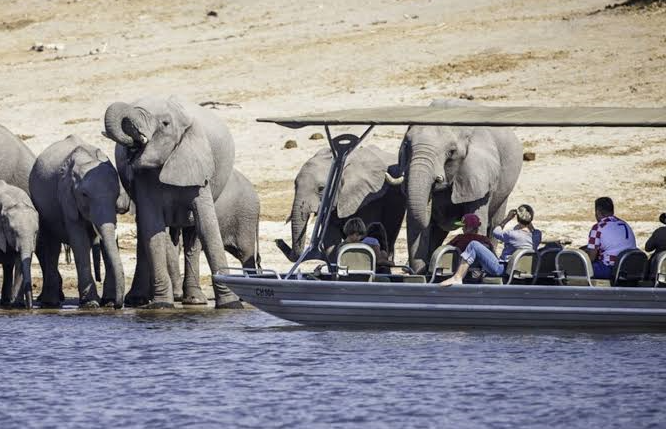
Inside Murchison Falls, overland safari vehicles access the northern bank game-viewing roads for elephant, giraffe, buffalo, lion, and leopard sightings. Additionally, a Nile River boat cruise from Paraa launches reveals hippos, crocodiles, and the falls themselves from the water. Consequently, Murchison Falls combines savanna game drives with river experiences available on no other Uganda overland route.
Kibale Forest National Park
Kibale Forest sits in western Uganda near Fort Portal town. The overland drive from Kampala takes approximately five hours through tea estates and crater lake country. Furthermore, the road passing Fort Portal provides some of Uganda’s most scenic highland driving, with views across ancient volcanic craters filled with dark water.
Kibale is home to East Africa’s largest chimpanzee population. Overland safari visitors spend a morning tracking habituated chimpanzee groups with experienced rangers. Additionally, the Bigodi Wetland Sanctuary adjacent to the park offers an afternoon birding and primate walk. Therefore, Kibale suits overland travelers who want a primate-focused experience distinct from gorilla trekking.
Queen Elizabeth National Park
Queen Elizabeth National Park is Uganda’s most popular destination on the southwestern overland circuit. The drive from Kibale to Queen Elizabeth takes approximately two hours through beautiful savanna transition landscapes. Consequently, the two parks combine naturally into a single efficient overland route.
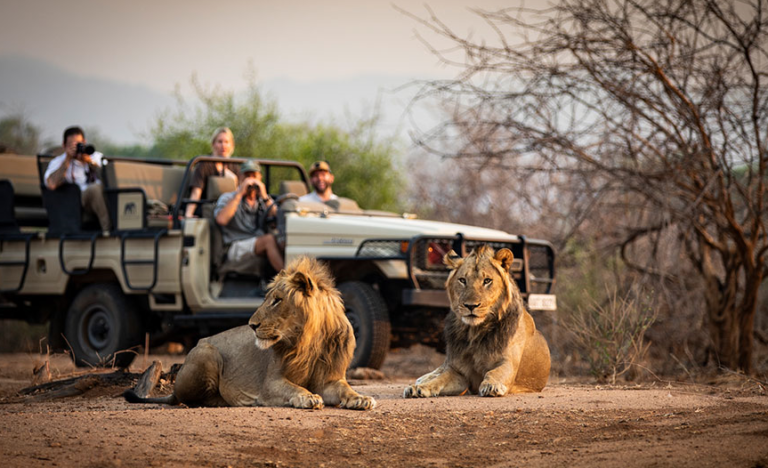
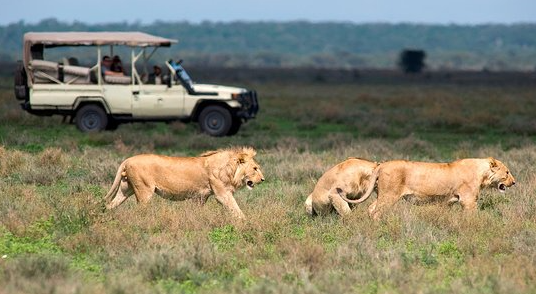
Queen Elizabeth’s Kasenyi Plains are renowned for lion sightings. Furthermore, the Kazinga Channel boat cruise between Lake George and Lake Edward provides one of Uganda’s finest wildlife experiences from the water. Tree-climbing lions in the Ishasha sector in the south attract overland safari visitors willing to drive an extra hour for this extraordinary sighting.
Bwindi Impenetrable National Park
Bwindi is the emotional highlight of most Uganda overland safaris. The drive from Queen Elizabeth’s Ishasha sector takes approximately two to three hours through steep forested hills. Furthermore, the final approach road to Bwindi descends through dramatic highland scenery that builds anticipation for the gorilla trek ahead.
Gorilla trekking permits must be booked well in advance through the Uganda Wildlife Authority. Each permit allows one hour with a habituated gorilla family. Consequently, the Bwindi gorilla encounter is consistently described as the single most powerful wildlife experience on any Uganda overland safari.
Kidepo Valley National Park
Kidepo Valley in Uganda’s far northeast is the most remote destination on the overland safari circuit. The drive from Kampala takes eight to nine hours via Gulu. Consequently, most overland travelers plan at least two nights in Kidepo to justify the long drive.
However, Kidepo rewards the effort generously. The park’s semi-arid landscape is unlike any other in Uganda. Furthermore, Kidepo harbors species absent from other Ugandan parks, including cheetahs, bat-eared foxes, caracals, and Besia oryx. The Narus Valley in particular offers extraordinarily dense wildlife concentrations during dry season months.
Lake Mburo National Park
Lake Mburo is the closest national park to Kampala on the southwestern route. It sits approximately three hours by road from the capital. Consequently, it suits overland travelers who want a national park experience without committing to a long first-day drive.
Lake Mburo offers Uganda’s only opportunity to see zebras, impalas, and elands in large numbers. Additionally, the park permits walking safaris and horse riding experiences unavailable at larger, more predator-dense parks. Furthermore, boat cruises on Lake Mburo reveal hippos, crocodiles, and exceptional waterbird diversity at close range.
Popular Uganda Overland Safari Routes
Route 1: The Northern Circuit (5–7 Days)
Kampala → Ziwa Rhino Sanctuary → Murchison Falls → Kampala
This northern circuit is ideal for first-time Uganda overland safari travelers. The route stops at Ziwa Rhino Sanctuary for foot-based rhino tracking before continuing to Murchison Falls for two nights of game drives and a Nile boat cruise. Furthermore, the return journey via Gulu town allows a brief exploration of northern Uganda’s cultural landscape. This route suits standard sedans as far as Masindi, but requires a 4×4 inside Murchison Falls National Park.
Route 2: The Western Circuit (8–10 Days)
Kampala → Kibale Forest → Queen Elizabeth → Bwindi → Lake Mburo → Kampala
The western circuit is Uganda’s most popular overland safari route. It combines chimpanzee tracking at Kibale, big game drives and boat cruises at Queen Elizabeth, gorilla trekking at Bwindi, and a relaxed wildlife and walking safari at Lake Mburo. Consequently, this route covers Uganda’s four most iconic wildlife experiences in a single logical loop. A genuine 4×4 is essential throughout this circuit.
Route 3: The Full Uganda Circuit (14–16 Days)
Kampala → Murchison Falls → Kibale → Queen Elizabeth → Bwindi → Mgahinga → Lake Mburo → Kampala
The full Uganda overland safari circuit covers every major park in one comprehensive journey. Additionally, optional extensions to Kidepo Valley in the northeast can add a further two to three days. This route suits experienced travelers with ample time and a strong appetite for road-based adventure. Furthermore, it delivers Uganda’s widest possible wildlife variety within a single overland itinerary.
Route 4: Uganda to Rwanda Overland (10–14 Days)
Kampala → Bwindi → Mgahinga → Volcanoes National Park (Rwanda) → Kigali
Cross-border Uganda overland safaris combining Uganda and Rwanda are increasingly popular. The border crossing at Katuna connects the two countries efficiently. Consequently, travelers can trek gorillas in both Bwindi and Rwanda’s Volcanoes National Park within a single overland trip. This route requires coordinating gorilla permits in both countries well in advance. Our combined Uganda Rwanda safari page outlines this route in detail.
Vehicles for Uganda Overland Safaris
Vehicle choice shapes the entire Uganda overland safari experience. Therefore, matching your vehicle to your planned route is essential.
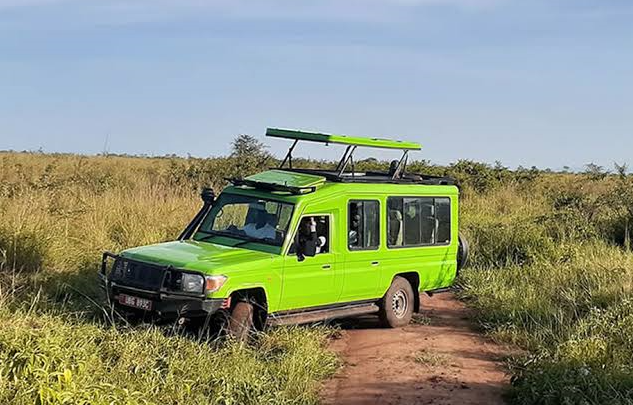
Toyota Land Cruiser 4×4 remains the standard vehicle for Uganda overland safaris. Its ground clearance, low-range gearbox, and proven reliability make it suitable for every park in Uganda. Furthermore, the Land Cruiser’s pop-top roof option enhances game viewing and photography significantly.
Toyota Land Cruiser Prado suits mixed tarmac and moderate off-road routes. It provides more interior comfort than the hardtop but lacks the extreme off-road capability of the full Land Cruiser. Consequently, the Prado works well on the western circuit but struggles on Kidepo’s remote tracks.
Converted overland trucks are used by group overland tour operators for larger parties. These purpose-built vehicles carry camping equipment, supplies, and multiple passengers across long multi-day routes. Additionally, they include elevated seating for improved game viewing. Furthermore, overland truck tours reduce per-person costs significantly for groups of eight or more.
For vehicle hire rates and comparisons, visit our detailed Uganda car hire prices guide.
Guided vs Self-Drive Uganda Overland Safaris
Both guided and self-drive Uganda overland safaris deliver outstanding results when planned well. However, they suit different traveler profiles.
Guided overland safaris are led by professional driver-guides who combine driving expertise with wildlife knowledge. Guides handle navigation, roadblocks, breakdowns, and park logistics efficiently. Furthermore, they identify wildlife and share ecological context that deepens the safari experience considerably. Consequently, guided Uganda overland safaris suit first-time visitors, those unfamiliar with left-hand driving, and travelers who want to focus entirely on the experience rather than logistics.
Self-drive overland safaris offer maximum flexibility and often lower total costs when vehicle hire is shared among a group. Additionally, self-drive travelers set their own daily schedules, linger at sightings, and explore side routes that guided tours skip. However, self-drive requires confidence on Uganda’s variable road conditions and in navigating police roadblocks without assistance.
For detailed guidance on driving independently, visit our Uganda driving tips guide before planning a self-drive overland route.
Best Time for Uganda Overland Safaris
Uganda overland safaris operate year-round. However, road conditions and wildlife visibility vary significantly by season.
Dry seasons (June–September and December–February) offer the best overall overland conditions. Roads are firmer, park tracks are more accessible, and wildlife congregates near water sources in visible open areas. Furthermore, gorilla trekking is more comfortable on drier, less slippery forest trails. Consequently, most overland travelers target these months for optimal experiences.
Wet seasons (March–May and October–November) bring lush, green landscapes and fewer tourists on the road. Additionally, birdwatching peaks during these months as migratory species arrive. However, some murram roads become impassable during heavy rain. Therefore, wet-season overland travelers must build flexibility into their schedules and travel in a high-clearance 4×4 without exception.
Costs for Uganda Overland Safaris
Uganda overland safari costs vary based on group size, vehicle type, accommodation standard, and included activities. The following represents typical cost ranges per person for guided overland safaris.
| Safari Duration | Budget (USD per person) | Mid-Range (USD per person) | Luxury (USD per person) |
|---|---|---|---|
| 5–7 Days | USD 800 – 1,200 | USD 1,500 – 2,500 | USD 3,000 – 5,000 |
| 8–10 Days | USD 1,200 – 1,800 | USD 2,500 – 4,000 | USD 5,000 – 8,000 |
| 14–16 Days | USD 2,000 – 3,000 | USD 4,000 – 7,000 | USD 8,000 – 15,000+ |
Gorilla trekking permits at USD 700 per person are the largest single activity cost on most Uganda overland safaris. Furthermore, chimpanzee tracking permits add USD 200 per person. Therefore, permit costs must be budgeted separately from accommodation and vehicle costs.
Additionally, the Africa Travel Resource maintains independent Uganda overland safari reviews that help travelers evaluate operators and experiences before booking.
What to Pack for Uganda Overland Safaris
Packing for an overland safari requires balancing practical comfort with luggage volume restrictions. Most overland vehicles accommodate medium-sized soft duffel bags more easily than rigid suitcases. Consequently, soft luggage is strongly preferred.
Essential items include neutral-colored clothing in khaki, olive, or beige for game drives. Additionally, a warm fleece or jacket is essential for early morning drives at altitude near Bwindi and Mgahinga. Waterproof hiking boots and a quality rain jacket prepare you for wet forest trails during gorilla and chimpanzee tracking.
Furthermore, a personal first aid kit, insect repellent, and malaria prophylaxis are non-negotiable for overland travel across Uganda. A portable power bank keeps devices charged on long driving days between lodges with limited electricity. Binoculars significantly enhance wildlife viewing during game drives across open savanna sections.
Final Thoughts on Uganda Overland Safaris
Uganda overland safaris deliver a depth of experience that no fly-in itinerary can fully replicate. The landscapes between parks are as compelling as the destinations themselves. Furthermore, the freedom of the open road connects travelers to Uganda’s human and natural story in ways that air travel bypasses entirely.
Whether you choose a guided overland tour or embark on an independent self-drive adventure, Uganda rewards road-based travel generously at every turn. Our experienced team designs Uganda overland safari itineraries for every travel style and budget. Contact us today to start planning your Uganda overland adventure.