Photography Gear Guide for an African Wildlife Safari
A photography gear guide for an African wildlife safari is one of the most searched resources before any East Africa trip. Getting your gear right transforms good sightings into extraordinary images. Getting it wrong means returning home with blurry, underexposed photos that fail to capture what you actually witnessed. Africa’s wildlife moves fast, lighting changes dramatically, and distances vary constantly. Therefore, understanding which equipment to bring, and why, matters enormously. This guide covers cameras, lenses, accessories, camera settings, and field techniques in practical detail. Whether you are a beginner or an experienced photographer, this photography gear guide for an African wildlife safari helps you prepare confidently. For safari itineraries that maximize photography opportunities, browse our Africa safari packages today.
Why Safari Photography Gear Deserves Careful Planning
Wildlife photography on an African safari differs significantly from most other photography environments. Animals move unpredictably. Distances range from three metres to three hundred metres within the same hour. Furthermore, game drives begin before sunrise in low, golden light and often end in deep afternoon shadow. Consequently, your gear must handle both extremes comfortably.
Additionally, dust, heat, and bumpy roads create challenging conditions for sensitive camera equipment. Therefore, choosing durable, well-sealed gear matters as much as optical quality. This photography gear guide for an African wildlife safari prioritizes real-world performance over theoretical specifications. For photography-specific safari itineraries, visit our photography safari packages page.
Cameras: Choosing the Right Body for Safari
Full-Frame vs Crop Sensor
The camera body debate for safari photography centers on full-frame versus crop sensor options. Full-frame cameras like the Sony A7R V, Canon EOS R5, and Nikon Z8 deliver exceptional image quality and low-light performance. Furthermore, their larger sensors handle high ISO settings with less visible noise. Consequently, early morning and late afternoon shots retain detail that smaller sensors struggle to reproduce.
Crop sensor cameras, however, offer a meaningful practical advantage on safari. The 1.5x or 1.6x crop factor effectively multiplies your lens focal length. Therefore, a 400mm lens becomes the equivalent of 600mm on a crop body. This extra reach matters enormously when photographing shy animals at distance. Popular crop sensor options include the Canon EOS 90D, Nikon D500, and Sony A6700.
Mirrorless vs DSLR
Mirrorless cameras have largely replaced DSLRs as the preferred choice for serious wildlife photographers. They offer faster burst rates, superior autofocus tracking, and silent shooting modes. Additionally, electronic viewfinders show exposure in real time, reducing the number of incorrectly exposed frames in challenging lighting. Consequently, mirrorless bodies suit the fast-paced, unpredictable nature of African wildlife photography extremely well.
That said, well-maintained DSLR bodies remain capable and reliable safari tools. Battery life is often longer on DSLRs. Furthermore, the optical viewfinder provides a true-to-life view that some photographers prefer in bright sunlight. Therefore, choose based on your existing investment in lenses and your personal shooting style rather than simply following trends.
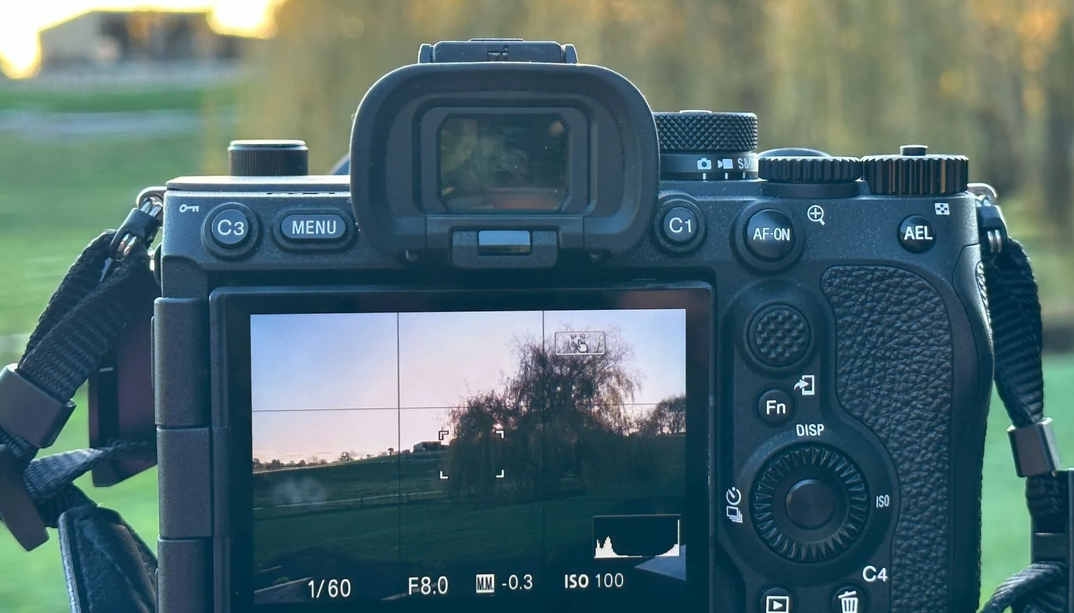
Lenses: The Most Important Decision in Your Photography Gear Guide
The Essential Telephoto Lens
Your telephoto lens is the single most important piece of gear in any photography gear guide for an African wildlife safari. A minimum focal length of 300mm is necessary for usable wildlife images. However, 400mm to 600mm delivers significantly better results across a wider range of situations.
The Canon EF 100-400mm f/4.5-5.6L IS II, Nikon 200-500mm f/5.6E, and Sony FE 200-600mm f/5.6-6.3G are the most popular choices among safari photographers. These zoom lenses balance reach, optical quality, and portability effectively. Furthermore, zoom flexibility allows rapid reframing when animals move close unexpectedly.
Prime lenses such as the Canon EF 500mm f/4L IS III or Nikon AF-S 500mm f/5.6E PF offer superior image quality and autofocus speed. However, their fixed focal length demands more precise positioning. Additionally, their cost is substantially higher. Therefore, most safari photographers choose high-quality zoom telephoto lenses over primes unless they have significant prior wildlife photography experience.
The Wide-Angle Lens
A wide-angle lens is often overlooked in safari photography gear discussions. However, it delivers images that telephoto cannot. Landscape shots of savanna at sunrise, wide environmental portraits showing animals in their full habitat, and inside-vehicle shots all require a wide-angle perspective.
A versatile option like the Sony FE 24-70mm f/2.8 GM, Canon RF 24-105mm f/4L, or Nikon Z 24-120mm f/4S covers most wide-to-standard focal length needs efficiently. Furthermore, these lenses work well for camp photography, cultural visits, and street scenes in gateway towns. Consequently, packing one wide zoom alongside your telephoto covers virtually every photographic situation on safari.
Teleconverters
Teleconverters extend your telephoto reach without additional lens weight. A 1.4x teleconverter on a 500mm lens produces 700mm. A 2x converter produces 1000mm. Furthermore, modern teleconverters from Canon, Nikon, and Sony maintain autofocus compatibility with most telephoto lenses. Therefore, carrying a 1.4x teleconverter adds meaningful flexibility for distant or shy subjects at minimal cost and weight.
Essential Accessories for Safari Photography
Beanbags and Window Mounts
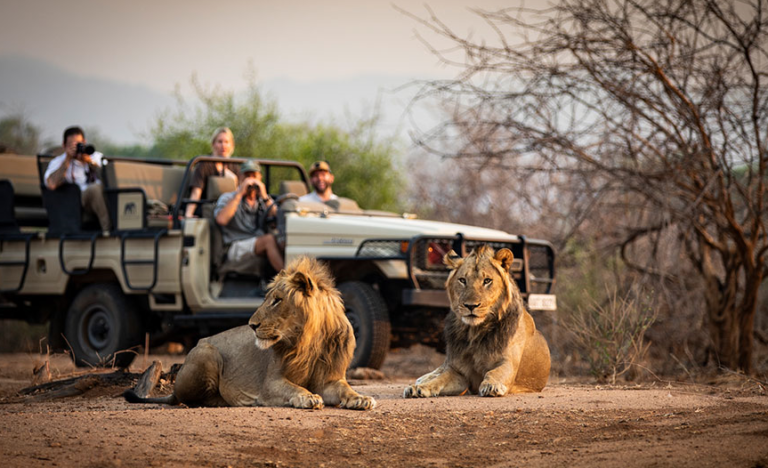
Tripods are impractical on most safari game drives. Vehicles move constantly, and setting up a tripod wastes critical seconds during fast-moving sightings. Therefore, a beanbag resting on the open window edge of your safari vehicle is the standard support solution. Beanbags conform to the window shape and absorb vehicle vibration effectively.
Window-mounted clamps offer a more rigid alternative for photographers using heavy telephoto lenses. Additionally, some premium safari vehicles come equipped with dedicated photography mounts on the roof hatch. Beanbags are inexpensive, lightweight, and highly effective, they belong in every photography gear guide for an African wildlife safari.
Memory Cards and Card Management
Bring significantly more memory card capacity than you think you need. Burst shooting on a single lion hunt or river crossing can fill a 64GB card within minutes. Furthermore, high-resolution mirrorless cameras produce large raw files that fill cards faster than photographers accustomed to older systems often expect.
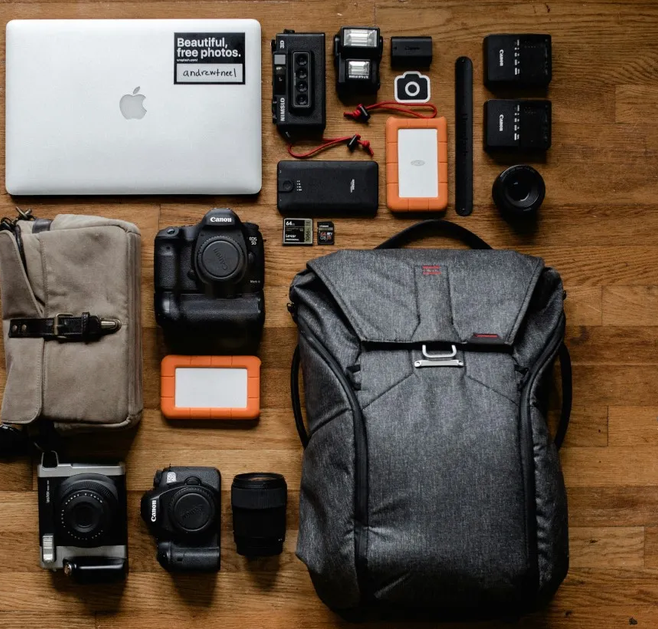
Pack a minimum of four to six 64GB or 128GB cards from reputable brands like SanDisk Extreme Pro or Lexar Professional. Additionally, a portable hard drive or SSD for nightly backups protects against card failure. The SanDisk professional memory solutions page offers current card speed ratings useful for matching cards to your specific camera’s burst requirements.
Batteries and Charging Solutions
Cold mornings and extended shooting sessions drain batteries faster than normal. Therefore, bring at least three fully charged batteries per camera body. Additionally, a multi-slot battery charger allows simultaneous charging of multiple batteries during lunch breaks.
Solar chargers work well at permanent safari camps and lodges with limited power access. Furthermore, a portable power bank with USB-C output charges many mirrorless camera bodies directly. Consequently, power management becomes a non-issue even in the most remote locations when you plan ahead properly.
Dust and Weather Protection
African safari roads generate significant dust. Even on sealed roads, following other vehicles kicks up fine red dust that penetrates camera bags and settles on sensor surfaces. Therefore, dust-sealed camera bodies and lenses are strongly preferred.
Carry a rocket blower for removing dust from the front lens element. Additionally, sensor cleaning swabs handle stubborn sensor dust that accumulates during lens changes. A rain cover for your camera bag protects equipment during unexpected showers, which arrive quickly even in dry season. Furthermore, silica gel packets inside your camera bag absorb moisture overnight in humid environments near lakes and forests.
Camera Settings for African Wildlife Photography
Autofocus Settings
Modern mirrorless cameras offer subject-tracking autofocus that follows animals automatically across the frame. Enable animal-detection autofocus if your camera supports it. This feature locks onto eyes and maintains focus even when subjects move erratically. Furthermore, set your camera to continuous autofocus mode throughout every game drive. Switching to manual focus wastes time during fast-moving action sequences.
Shutter Speed
Fast shutter speeds are essential for sharp wildlife images. Set a minimum shutter speed of 1/1000 second for stationary animals. Increase to 1/2000 or 1/3200 second for running animals, birds in flight, or any fast movement. Additionally, use Auto ISO to maintain your target shutter speed automatically as light changes during the golden hours.
Exposure and Metering
Evaluative or matrix metering works well for most safari situations. However, when photographing a dark animal against a bright sky or a light-colored subject against deep shadow, exposure compensation adjustments of plus or minus one to two stops prevent blown highlights or crushed shadows. Therefore, checking your histogram after every significant lighting change is a habit worth developing early in your safari.
Burst Mode
Always shoot in high-speed burst mode during any action sequence. Animals move faster than human reaction time. Consequently, burst shooting ensures at least several sharp frames within each action sequence. Modern cards and cameras handle burst writing efficiently. Therefore, enable your highest burst rate without hesitation during active wildlife encounters.
Protecting and Transporting Your Photography Gear
Camera Bags for Safari
Choose a camera bag designed for outdoor use rather than studio or travel photography. A F-Stop camera bag or Lowepro ProTrekker backpack combines carrying capacity with weather resistance and accessibility. Additionally, a smaller shoulder bag or sling bag keeps your primary camera body accessible during game drives without requiring the full backpack.
On flights, always carry camera bodies and lenses in your cabin baggage. Checked baggage frequently suffers rough handling and temperature extremes. Furthermore, insurance claims for damaged checked photography equipment are notoriously difficult to process. Therefore, protect your investment by keeping it within arm’s reach at all times.
Insurance
Travel insurance that explicitly covers photography equipment is essential for any serious safari photographer. Standard travel insurance policies often exclude high-value electronics or limit claims to amounts far below the replacement cost of quality lenses. Therefore, check your policy limits carefully and purchase specialist photography equipment insurance if necessary. Resources like Photography and Camera News maintain updated guides on equipment insurance options for traveling photographers.
Top Photography Safari Destinations in Africa
Certain African destinations consistently produce outstanding wildlife photography opportunities. The Masai Mara in Kenya offers extraordinary big cat densities and the Great Migration river crossings. Furthermore, the Serengeti in Tanzania provides both open-plain shooting and intimate forest encounters depending on the season.
In Uganda, Bwindi Impenetrable Forest delivers gorilla photography unlike anywhere else on earth. Additionally, Queen Elizabeth National Park and Murchison Falls offer diverse subjects from tree-climbing lions to Nile cruises. For detailed photography opportunity breakdowns by destination, visit our best parks for wildlife photography page.
Quick Photography Gear Checklist for African Safari
| Category | Recommended Items |
|---|---|
| Camera Bodies | 1–2 mirrorless or DSLR bodies, weather-sealed |
| Telephoto Lens | 400mm–600mm zoom or prime |
| Wide-Angle Lens | 24–105mm zoom |
| Teleconverter | 1.4x compatible with your telephoto |
| Support | Beanbag or window mount |
| Memory Cards | 4–6 x 64GB or 128GB cards |
| Batteries | 3+ batteries per body, multi-slot charger |
| Protection | Dust covers, rain cover, rocket blower |
| Storage | Portable SSD for nightly backups |
| Bag | Weather-resistant camera backpack + sling bag |
Final Thoughts on Photography Gear for an African Wildlife Safari
This photography gear guide for an African wildlife safari covers the essential decisions every traveling photographer faces. The right camera and lens combination, paired with practical accessories and solid field technique, transforms your safari images from snapshots into photographs you are genuinely proud of. Furthermore, preparing your gear before departure removes technical anxiety and lets you focus fully on the extraordinary wildlife in front of you.
Our team designs safari itineraries with photography in mind, early game drives, private vehicles, and optimal park positioning all contribute to outstanding results. Contact us today to plan your African wildlife photography safari.