Hidden Safari Lodges in Rwanda You Should Visit Before Everyone Else Does
Ben had done the standard Rwanda safari three times.
Three trips to Volcanoes National Park. Three gorilla permits. Three mornings in the forest with a silverback. Each one extraordinary. Each one, by the third trip, familiar in its structure if not in its specific moments.
He called us before his fourth trip. “I want something different,” he said. “Not the gorillas, I’ll still do the gorillas. But I want the parts of Rwanda that most people don’t find.”
He called us from the train back to Kigali at the end.
“Why does nobody know about this?” he asked.
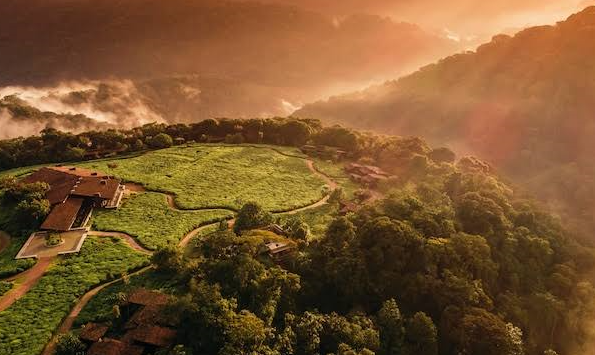
The hidden safari lodges in Rwanda exist at the edges of the standard itinerary, in the valleys between the famous parks, on the shores of the less-visited lakes, in the communities that receive international visitors infrequently enough that the welcome still feels completely genuine. They are not second-best options that people choose because the famous lodges are full. They are experiences that the famous lodges, for all their quality, cannot replicate.
This guide covers the hidden safari lodges in Rwanda that deserve your attention, and your night’s stay, on your next trip to this extraordinary country.
Why Hidden Safari Lodges in Rwanda Offer Something the Famous Ones Cannot
The famous lodges near Volcanoes National Park are famous for good reasons. Bisate, Singita Kwitonda, Sabyinyo Silverback, these are genuinely excellent properties. However, their fame has consequences.
The dining rooms are full. The game drives depart in coordinated convoys. The ranger briefings happen in rooms with 80 people. The experience is managed, professional, and excellent, but it is experienced simultaneously by dozens of other visitors having essentially the same day.
The hidden safari lodges in Rwanda operate differently. They exist in locations that most itineraries don’t include. Their dining rooms seat twelve people. Their guides know you by name before breakfast. The ranger at the local park gate has met three international visitors this week. The community around the lodge hasn’t yet adjusted its natural behaviour to the presence of tourism.
This is not discomfort. It is genuine encounter.
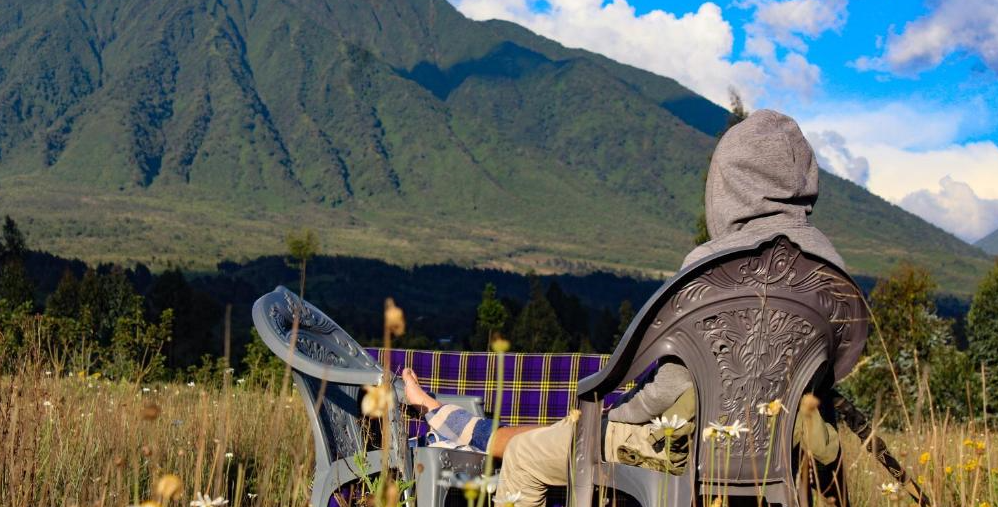
Rwanda’s most famous attractions are famous because they are extraordinary. But Rwanda is a small country of enormous depth, and the extraordinary is distributed across it, not concentrated only in the places where the most famous lodges happen to be.
Hidden Safari Lodges in Rwanda: Lake Kivu’s Secret Shore
Cormoran Lodge, Karongi: Lake Kivu’s Finest Hidden Gem
Lake Kivu is not entirely unknown, it appears in some Rwanda itineraries as a stop between Nyungwe and Volcanoes. However, most visitors who include it spend one night in Rubavu/Gisenyi at the northern end and move on.
The middle section of the lake, around Karongi (Kibuye), is genuinely overlooked. Furthermore, it is, by the assessment of almost everyone who finds it, the most beautiful stretch of the Rwandan shore.
Cormoran Lodge sits on a small peninsula near Karongi, directly on the lake. The property has 8 rooms and bungalows arranged along the waterfront. Each wakes you to the sound of the lake rather than the sound of a hotel corridor. The view across the water to the Congo hills on the opposite shore, particularly at dawn, when the water is perfectly still and the hills are silhouetted against a pale sky, is one of the finest morning views in East Africa.
The lodge is small enough that the staff know every guest within hours. The food is locally sourced and consistently excellent. The boat trips they organise, to Napoleon Island’s extraordinary bat colony, to the small fishing communities on the lake’s islands, to the quieter northern reaches of the Karongi bay, are among the most rewarding afternoon activities in Rwanda.
Furthermore, the price is a fraction of equivalent luxury lodges near Volcanoes National Park. Two nights at Cormoran Lodge costs approximately what one night at Bisate costs, and provides a completely different, complementary, and in some respects equally affecting experience.
Why it’s hidden: Karongi doesn’t appear in most Rwanda safari itineraries because it sits between Nyungwe and Volcanoes without being on the most direct route between them. Price range: $120–$200 per person per night (half board) Best for: Anyone doing a western Rwanda circuit; repeat visitors; couples; travellers who specifically love lakes Distance from Volcanoes NP: 2.5 hours via the lake shore road
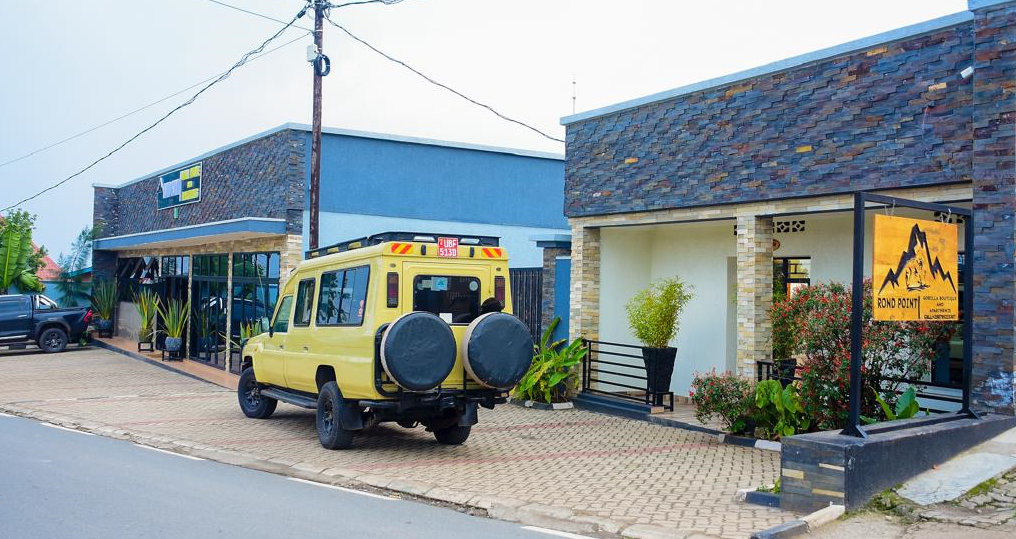
Home St Jean, Karongi: Community Character on Lake Kivu
Home St Jean is a smaller, more budget-conscious option at Karongi, a family-run guesthouse on the lakeshore whose character is entirely a product of the family that runs it.
The rooms are simple. The food is home-cooked and reliably good. The welcome is of the specific quality that only properties where the owner is present every day can produce. Furthermore, the family’s connections to the local fishing community mean that activities here, lake boat trips, fishing village visits, morning market walks, are arranged with a directness and authenticity that operator-managed lodges cannot match.
Home St Jean is the kind of hidden safari lodge in Rwanda that travel writers discover and describe as a secret, then feel slightly guilty about putting into print.
Price range: $40–$80 per person per night (bed and breakfast) Best for: Budget travellers, those who want authentic family-run hospitality Unique quality: Owner-operated warmth that cannot be manufactured
Rusizi Eco-Lodge: The Forgotten Southern Lake Shore
At the southern end of Lake Kivu, where the lake drains into the Rusizi River and the DRC border sits immediately across the water, a small number of eco-lodges provide accommodation that almost no international safari itinerary includes.
Rusizi town is primarily a transit point, travellers passing through on the way from Nyungwe to Volcanoes stop for fuel rather than for the night. Consequently, the small lodges here receive primarily business travellers and the occasional adventurous tourist who has done enough research to know that the southern lake shore has its own particular beauty.
The view from the best Rusizi eco-lodges across the lake toward the DRC is dramatic. The Kivu lowland forest, different in character from the highland forest of Nyungwe, flanks the lake in this section. Additionally, the Rusizi River Delta, a short drive from town, is one of the most reliable hippo viewing sites in Rwanda outside Akagera National Park.
Why it’s hidden: Rusizi sits at the end of Lake Kivu rather than the middle, meaning most itineraries don’t include it. Price range: $50–$100 per person per night Best for: Adventurous travellers, those specifically wanting the southern lake atmosphere, birders targeting the Rusizi Delta wetland species
Hidden Safari Lodges in Rwanda: The Twin Lakes Area
Twin Lakes Community Guesthouse: Burera and Ruhondo
The Twin Lakes, Lac Burera and Lac Ruhondo, sit in ancient volcanic craters in Rwanda’s northwestern highlands, approximately 30 kilometres northeast of Musanze. They appear on maps. They appear in photographs in Rwanda tourism materials. However, they almost never appear in safari itineraries as overnight destinations.
This is an oversight that deserves correction.
The views from the hillsides above the Twin Lakes are extraordinary. The two crater lakes sit at different elevations in adjacent valleys, and from the right vantage point, typically a hillside above the road between them, both are simultaneously visible. The Virunga volcanoes are visible to the west. The hills of Rwanda’s northern highlands recede in every other direction.
Several small community guesthouses on the hillsides above the lakes provide basic but comfortable accommodation. The income from these guesthouses goes directly to the communities whose farming families have cultivated these hillsides for generations. Furthermore, the morning walks from these properties, along trails through tea plantations and subsistence farms, with the lakes appearing and disappearing through the vegetation below, are among the most quietly beautiful walking experiences in Rwanda.
These are not famous lodges. They have no marketing budgets. They appear in no glossy brochures. Consequently, finding them requires either local knowledge or an operator who knows the country at this level of detail.
Why it’s hidden: No major safari brand has developed here. The area is “known” as a viewpoint but rarely visited as an overnight destination. Price range: $30–$70 per person per night Best for: Walkers, photographers, travellers who want Rwanda without the tourism infrastructure Distance from Volcanoes NP: 30–40 minutes, an excellent pre- or post-trek stay
Hidden Safari Lodges in Rwanda: The Gishwati-Mukura Frontier
Gishwati Forest Camp: Rwanda’s Most Undervisited Wildlife Lodge
Gishwati-Mukura National Park was gazetted in 2016. It has been open to tourism for less than a decade. Consequently, the accommodation near it is genuinely underdeveloped, and that is precisely what makes it so interesting.
Gishwati Forest Camp, reviewed in more detail in our best lodges in Gishwati-Mukura National Park guide, is one of Rwanda’s most genuinely hidden safari lodges. The camp sits adjacent to a forest that is actively recovering from near-total destruction. The chimpanzees here are mid-way through habituation. The endemic bird species are returning to habitat that was bare farmland a decade ago.
Staying here is not merely visiting a destination. It is witnessing a conservation story in progress. The rangers you meet have watched this forest grow. The trees you walk through are ten years old in some sections. And the chimpanzees you track are in the process of learning, incrementally, cautiously, daily, that the humans who come quietly into their forest are not a threat.
That process is one of the most extraordinary things that wildlife conservation produces. Very few visitors have seen it.
Why it’s hidden: New park, developing tourism infrastructure, not yet on standard Rwanda safari circuits. Price range: $100–$200 per person per night Best for: Conservation enthusiasts, serious birders, repeat Rwanda visitors seeking new experiences Distance from Volcanoes NP: 1.5 hours south
Hidden Safari Lodges in Rwanda: Rural Hillside Retreats
Inzuki Designs Community Lodge, Musanze Area
Several community-owned and community-designed lodges have emerged in the Musanze area over the past decade, properties that exist at the intersection of cultural tourism and genuine community livelihood.
The most interesting of these is Inzuki Designs, a craft cooperative that has extended its community programme to include simple overnight accommodation in renovated traditional-style structures. The interior design uses textiles, ceramics, and woven pieces produced by the cooperative’s artisans. Consequently, staying here is simultaneously a cultural experience and a craft market exploration.
The guests who find this kind of property are rarely the standard gorilla trekking visitor. They are travellers who arrived in Rwanda specifically because they wanted something different, and who leave with a collection of extraordinary handmade pieces and a set of photographs that nobody else from their social circle has on their wall.
Why it’s hidden: Community lodges don’t appear in major booking platforms or operator brochures. Price range: $40–$80 per person per night Best for: Design enthusiasts, cultural travellers, those who want craft experiences alongside wildlife
Virunga Lodge: Hidden in Plain Sight
This may seem like a contradiction Virunga Lodge is reviewed in multiple Rwanda accommodation guides, including our own lodges with gorilla views Rwanda article. However, it qualifies for this hidden lodges guide for a specific reason.
Most Volcanoes National Park visitors stay in the lodges closest to the park headquarters, the Kinigi and Bisate area. Virunga Lodge sits on a ridge above the Twin Lakes, 30 minutes from the park headquarters. It is geographically further from the trek starting point and consequently passed over by visitors who prioritise logistics over views.
This is the wrong calculation. The view from Virunga Lodge, five volcanoes on one horizon, two crater lakes on the other, is the finest view from any Rwanda safari lodge. The extra 15 minutes of morning drive is an entirely reasonable price for waking up to that panorama.
For visitors who know about Virunga Lodge, it is not hidden. For visitors who don’t, which is most of them, it is one of Rwanda’s most significant undiscovered properties.
Why it’s hidden: Position 30 minutes from the park headquarters makes it less obvious than closer alternatives. Price range: $400–$700 per person per night (half board) Best for: Travellers who prioritise the overall lodge experience over trek morning convenience
Hidden Safari Lodges in Rwanda: What Connects Them
The hidden safari lodges in Rwanda that appear in this guide share several characteristics that are worth naming explicitly.
They are community-connected. Almost without exception, the properties reviewed here are either community-owned or employ deeply from surrounding communities. Consequently, staying at them puts money directly into local households in ways that large branded properties often do not.
They offer intimacy. None of them seat 60 people at dinner. None of them run coordinated convoy game drives. The scale of these properties means that the experience is personal in a way that the famous lodges, despite their excellence, cannot always achieve.
They require a different kind of traveller. The hidden safari lodges in Rwanda are not for visitors who want every detail managed, every comfort guaranteed, and every interaction buffered by professional service. They are for travellers who are comfortable with modest facilities, who find genuine community engagement more interesting than perfect service, and who define “extraordinary” differently from the luxury safari brochure definition.
They are currently affordable. This will change. Rwanda’s tourism infrastructure is expanding rapidly. The lodges that are hidden today will be discovered in the next five years. Furthermore, as they are discovered, their prices will adjust accordingly.
Go now.
How to Find Hidden Safari Lodges in Rwanda on Your Itinerary
The practical challenge of including hidden safari lodges in Rwanda is that they don’t appear in standard booking platforms. They don’t have marketing teams. They frequently don’t have websites.
Finding them requires three approaches:
Use a specialist operator with genuine ground-level knowledge. A Rwanda specialist who has personally stayed at or visited the lodges they recommend knows the hidden properties that don’t advertise. This is the most reliable approach.
Ask your driver or guide. The best Rwanda safari drivers know every property on every road they regularly travel. Ask specifically: “What’s a small lodge near [destination] that most tourists don’t know about?” The answer is almost always interesting.
Read deeply before you travel. Travel blogs, conservation organization websites, and community tourism initiatives often document properties that mainstream booking platforms don’t carry.
Our team at Africa Safari Tours has built relationships with the best hidden safari lodges in Rwanda over years of on-the-ground experience. See our Rwanda gorilla safari packages and Rwanda cultural experiences guides for itineraries that go beyond the standard circuit.
For timing advice on when these properties are at their best, see our best time to visit Rwanda for a safari guide.
According to Visit Rwanda, community-based tourism is one of the fastest-growing segments of Rwanda’s visitor economy. The Rwanda Development Board actively supports community accommodation development across the country.
FAQs
Are hidden safari lodges in Rwanda safe?
Yes. Rwanda is consistently rated among Africa’s safest countries for tourists. The community-based and small lodges reviewed here are safe and well-managed, even where facilities are modest.
Do hidden Rwanda lodges have reliable hot water and electricity?
Standards vary. The Lake Kivu lodges (Cormoran, Home St Jean) have reliable facilities. Community guesthouses at the Twin Lakes and Gishwati area may have intermittent electricity and basic plumbing. Ask specifically before booking if these matter to you.
How do I book community lodges that don’t have websites?
Through a specialist safari operator with established relationships. Contact Africa Safari Tours, our team can book and coordinate most of the properties reviewed here.
Can I combine hidden lodges with the famous ones on one trip?
Absolutely. The best Rwanda itineraries combine both, famous lodges for the flagship experiences (gorillas, Akagera game drives) and hidden properties for the texture and depth that the famous circuit misses. Ben’s fourth Rwanda trip was exactly this: gorillas at a famous lodge, hidden properties for everything else.
Which hidden safari lodge in Rwanda has the best view?
The Twin Lakes community guesthouses and Virunga Lodge both offer extraordinary views. However, for pure “I cannot believe nobody else is here” quality, the hillside properties above the Twin Lakes provide views of a landscape that most Rwanda visitors drive through without stopping.