Flying Safaris vs Road Trips: How to Travel East Africa
Flying safaris vs road trips East Africa is one of the biggest decisions every safari traveler faces. Both options deliver extraordinary wildlife experiences. However, they differ significantly in cost, comfort, speed, and the overall journey feel. A flying safari whisks you between parks in under an hour. A road trip, on the other hand, immerses you in landscapes, villages, and roadside wildlife that the air route simply skips. This guide compares both travel styles honestly and in detail. By the end, you will know exactly which approach suits your trip. To start planning, visit our East Africa safari packages page today.

Understanding the Two Travel Styles
Before comparing flying safaris vs road trips in East Africa, it helps to define each clearly. A flying safari uses small charter planes or scheduled regional flights to transfer between national parks and lodges. Road trips use 4×4 safari vehicles driven by experienced guides across overland routes connecting parks and destinations.
Both styles are widely used across Kenya, Tanzania, Uganda, Rwanda, and beyond. Furthermore, many travelers combine both within a single itinerary, flying into remote areas and driving through scenic corridors. Therefore, the choice is not always either/or. Understanding the strengths of each helps you build the smartest possible East Africa itinerary.
Flying Safaris vs Road Trips East Africa: The Core Differences
Travel Time and Efficiency
Flying safaris win decisively on speed. A flight from Nairobi to the Masai Mara takes approximately 45 minutes. The same journey by road takes five to six hours. Consequently, flying saves a full day of transfer time, which can be redirected toward game drives and activities.
However, road trips offer something flying cannot replace. The overland journey itself is part of the experience. Driving through the Great Rift Valley, passing Maasai villages, and spotting roadside wildlife adds texture and depth to your safari story. Therefore, travelers with enough time often find road trips more rewarding overall.
Cost Comparison
Cost is where the gap between flying safaris and road trips widens most significantly. Charter flights in East Africa are expensive. A single leg between two parks can cost anywhere from USD 200 to USD 600 per person. Consequently, a multi-park itinerary using charter flights adds thousands of dollars per person to the total budget.
Road trips are considerably more affordable. Safari vehicle hire, fuel, and driver-guide fees cost a fraction of charter flight prices. Therefore, budget-conscious travelers and families with multiple members almost always choose road transport. Additionally, group road trips allow per-person costs to drop significantly as the vehicle capacity fills.
For a detailed cost breakdown, visit our East Africa safari budget guide.
Wildlife Viewing En Route
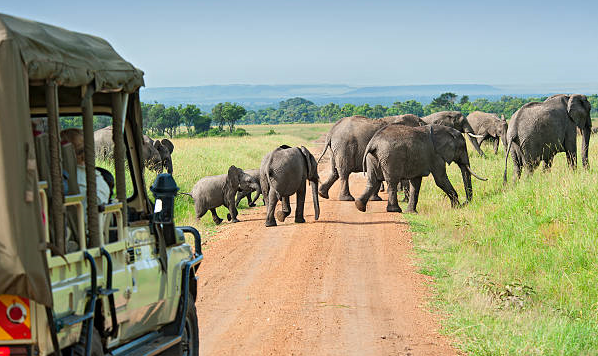
This is where road trips hold a clear advantage. Overland routes between parks pass through diverse habitats. Game animals frequently cross or graze alongside main roads. Furthermore, spontaneous sightings, a cheetah on a termite mound, a herd of elephants crossing the road, happen exclusively on ground transfers.
Flying safaris skip all of this. You board a small plane at one airstrip and land at another. The journey between is fast but visually limited to aerial landscape views. However, those aerial views are spectacular in their own right, particularly over the Serengeti plains or the Rift Valley escarpment. Therefore, both offer visual rewards, just of entirely different kinds.
Comfort and Physical Demands
Small charter planes in East Africa are typically six to twelve-seater propeller aircraft. They are efficient but bumpy in turbulence. Additionally, luggage restrictions on bush planes are strict, usually 15kg in soft bags only. Consequently, packing light is mandatory for fly-in safaris.
Road trips involve long hours in 4×4 vehicles on sometimes rough roads. Corrugated dirt tracks and potholed tarmac can make transfers physically tiring. However, modern safari vehicles with pop-up roofs and cushioned seats handle most terrain comfortably. Furthermore, road trips allow stops whenever something interesting appears, which breaks up long drives naturally.
Access to Remote Areas
Flying safaris unlock destinations that road transport struggles to reach efficiently. Remote camps in the northern Serengeti, the Laikipia Plateau in Kenya, or the Omo Valley in Ethiopia become accessible only by air. Consequently, flying opens up a tier of exclusive, off-the-beaten-track experiences unavailable to road travelers on tight schedules.
Road trips, meanwhile, access areas without functioning airstrips. Many community conservancies, cultural villages, and lesser-visited parks lack landing facilities. Therefore, overland travel gives access to a different kind of remoteness, quieter roads, fewer tourists, and a more grounded connection to the places in between destinations.
When Flying Safaris Make More Sense
Several situations clearly favor flying over driving in East Africa. First, if you have fewer than seven days, flying conserves precious time for wildlife activities. Second, if your itinerary combines destinations in multiple countries, Kenya and Tanzania, for instance, flying avoids lengthy border crossing delays. Third, older travelers or those with mobility challenges often find flying far more comfortable than long overland drives.
Additionally, exclusive fly-in bush camps typically offer an ultra-premium experience worth the premium cost. These camps are small, private, and positioned in areas with exceptional wildlife density. Furthermore, landing fees and park contributions embedded in those lodges directly support conservation in remote areas. Our Kenya flying safari packages highlights several outstanding fly-in itineraries.
When Road Trips Make More Sense
Road trips suit a different but equally valid set of traveler priorities. If you have ten days or more, the overland route rewards patience with experiences money cannot buy in the air. Driving through Uganda’s green hills toward Bwindi, watching the Kenyan plains open up on the descent to the Mara, or passing through small Tanzanian towns all add dimension to a safari journey.
Budget travelers benefit enormously from road transport. A family of four can complete a full Kenya or Tanzania safari circuit by road for the cost of two charter flight legs. Therefore, road safaris democratize access to world-class wildlife experiences. Furthermore, children especially enjoy the constant movement, spontaneous stops, and interaction with the landscape that road travel provides.
Road trips also suit travelers interested in culture, photography, and slow travel. A scenic drive past the Ngorongoro Highlands or along Lake Victoria’s shores delivers images and impressions no flight can offer. For overland route ideas, browse our Uganda road safari itineraries.
Combining Both: The Smartest East Africa Itinerary
Many experienced safari travelers combine flying safaris with road trips within a single itinerary. This hybrid approach captures the strengths of both. A common structure starts with a road trip through accessible, well-connected parks. Then, a charter flight covers a longer leg to a remote destination. Finally, the return journey continues overland to maximize scenic exposure.
For example, a Tanzania itinerary might drive from Arusha to Tarangire and the Ngorongoro Crater, then fly into the northern Serengeti to save three days of driving. Alternatively, a Uganda itinerary might drive to Murchison Falls and Queen Elizabeth, then fly to Bwindi to avoid the longest road section. Consequently, this approach balances cost, comfort, and experience intelligently.
The African Aviation network connects most East African park airstrips and publishes schedules worth reviewing during your planning process.
Key Factors to Help You Decide
Several questions help clarify which option suits your trip. Ask yourself how many days you have available. Ask whether your priority is maximizing time in parks or experiencing the journey between them. Consider your budget honestly and whether charter flight costs fit within it comfortably.
Additionally, think about your physical comfort threshold. Long drives on rough roads require reasonable stamina. Flying removes this variable entirely. Furthermore, consider who is traveling with you. Children under ten often struggle with very long drives. Older parents or grandparents may find bush plane seats more comfortable than unpaved road transfers.
| Factor | Flying Safari | Road Trip |
|---|---|---|
| Speed | Very fast | Slow to moderate |
| Cost | High | Affordable |
| Comfort | High (short duration) | Variable (long duration) |
| Scenic journey | Aerial views only | Full ground immersion |
| Wildlife en route | None | Frequent sightings |
| Luggage | 15kg soft bag limit | Flexible |
| Remote access | Excellent | Limited |
| Best for | Short trips, luxury travelers | Long trips, budget travelers |
Flying Safaris vs Road Trips East Africa: Final Verdict
Flying safaris vs road trips in East Africa is ultimately not a competition with a single winner. Both deliver outstanding safari experiences. The right choice depends entirely on your time, budget, physical comfort, and travel priorities. Flying suits travelers who want maximum park time within minimum days. Road trips suit those who value the full journey, cultural texture, and budget flexibility.
Many of the best East Africa safaris we design combine both elements thoughtfully. If you would like help deciding which approach fits your specific plans, our team is ready to assist. Contact us today to start planning your East Africa adventure.