Explore Egypt: Historical Tours & Sahara Desert Adventures, The Complete Guide
Marcus stood at the base of the Great Pyramid of Giza at 5:45am.
He had been to forty-two countries. Seen the Taj Mahal, Angkor Wat, Machu Picchu, and the temples of Kyoto. He considered himself largely unsurpriseable by the built environment. And yet, standing at the base of the largest stone structure ever constructed by human hands, feeling its scale not in the intellectual sense he had felt it in books and documentaries, but in the physical, immediate, slightly frightening sense of something that utterly dwarfs you, he found himself without words.
“I was not prepared,” he said. “Nobody told me it would feel like this.”
To explore Egypt through historical tours and Sahara Desert adventures is to encounter two extraordinary experiences available anywhere on earth. The ancient civilisation that built the pyramids, Luxor’s temples, the Valley of the Kings, and Abu Simbel represents human achievement no other ancient culture left as completely visible. And the Sahara Desert, the world’s largest hot desert covering northern Africa, offers alien, beautiful landscape experiences travellers struggle to describe in reference to anything previously seen.
This guide covers the full picture, historical tours, desert adventures, Nile cruises, practical planning, and the specific combination that delivers the most complete Egypt experience.
Why Egypt Belongs on Every Africa Travel Itinerary
Egypt is not typically included in the East or Southern Africa safari itineraries that define most travellers’ African experience. However, for travellers who are building a comprehensive Africa travel plan, or who want to combine a traditional safari with something completely different, Egypt represents a genuinely compelling addition.
According to the Egypt Tourism Authority, Egypt hosts some of the world’s most-visited historical sites and an increasingly sophisticated adventure travel infrastructure. The country’s ancient monuments are recognised by UNESCO as among the most significant human heritage sites on earth. Furthermore, Egypt’s position at Africa’s northeastern corner makes it logistically accessible from East African safari hubs, direct flights connect Cairo to Nairobi, Addis Ababa, and Kigali.
For travellers combining an Egypt visit with East African safari experiences, the combination of ancient human civilisation with extraordinary living wildlife creates one of the most comprehensive Africa travel experiences available. See our Africa safari packages page for combined Egypt-Africa itinerary options.
Historical Tours in Egypt: The Ancient World Made Visible
Cairo and the Giza Plateau: Where Egypt’s History Begins
Every Egypt historical tour begins in Cairo. The capital city is chaotic, energetic, and overwhelming in the way that only megacities with 20+ million inhabitants can be. However, within this modern urban explosion, the ancient world is immediately and unmistakably present.
The Great Pyramids of Giza are the most visited historical site in Africa and one of the most visited on earth. The complex includes three main pyramids, Khufu (the Great Pyramid, 137 metres high), Khafre, and Menkaure, along with the Great Sphinx, multiple subsidiary pyramids, and an extensive complex of mortuary temples and causeways.
What no photograph or documentary fully conveys is the scale and the physical impact of the pyramids in person. The Great Pyramid of Khufu was the tallest man-made structure on earth for 3,800 years, from approximately 2560 BCE until the completion of Lincoln Cathedral in England in 1311 CE. Standing at its base, looking up at courses of limestone blocks weighing on average 2.5 tonnes each, produces a cognitive dissonance that experienced travelers universally describe as one of the most affecting moments of their lives.
Practical tips for the Giza Plateau:
- Arrive at dawn. The pyramid complex opens at 8am, but the Sound and Light Show entrance and some independent access allow earlier arrival. The early morning light on the limestone is extraordinary and the crowds are minimal.
- Hire a licensed Egyptian guide. The archaeological and historical context of the complex is vastly more accessible with an expert interpreter.
- The Great Sphinx is included in the plateau ticket and is best viewed from the Sphinx enclosure at ground level rather than from the road above.
The Egyptian Museum in Tahrir Square, currently being supplemented by the Grand Egyptian Museum at Giza, one of the largest museums in the world, holds the most extraordinary collection of ancient Egyptian artefacts anywhere on earth. The Tutankhamun galleries, housing the complete contents of the boy king’s tomb, including the famous golden death mask, are among the most visited museum galleries in the world. Visit the Egyptian Museum Cairo website for current exhibition details.
Islamic Cairo provides a completely different historical layer, the medieval mosques, madrasas, caravanserais, and bazaars of the Fatimid, Ayyubid, and Mamluk periods create one of the finest preserved medieval urban streetscapes in the world. Khan el-Khalili market has been in continuous operation since the 14th century.
Luxor: The World’s Greatest Open-Air Museum
Four hours south of Cairo by air, or a night’s Nile cruise from Aswan, Luxor occupies the site of ancient Thebes, the capital of Egypt’s New Kingdom and the centre of the most intensive period of temple construction in the ancient world.
The Egypt Tourism Authority describes Luxor as the world’s greatest open-air museum. This is not marketing hyperbole. The concentration of monuments, temples, and tomb complexes in and around the modern city is simply without parallel anywhere on earth.
Karnak Temple Complex on the east bank of the Nile is the largest religious building ever constructed, a 200-hectare complex of temples, chapels, obelisks, and processional avenues built over a 2,000-year period by successive pharaohs who each tried to outbuild their predecessors. The Hypostyle Hall alone, 134 columns, the largest up to 21 metres high, is one of the most staggering architectural achievements of the ancient world.
Luxor Temple on the east bank, connected to Karnak by the 3-kilometre Avenue of Sphinxes, is particularly spectacular at night when floodlit against the dark sky.
The Valley of the Kings on the west bank contains 63 royal tombs of the New Kingdom pharaohs, including the famous tomb of Tutankhamun. The painted walls of the royal tombs, depicting scenes from religious texts intended to guide the pharaoh’s journey through the afterlife, are in extraordinary condition given their age. The detail and the colour, in a tomb that has been sealed for 3,000 years and opened less than a century ago, is breathtaking.
The Temple of Hatshepsut at Deir el-Bahari is architecturally unique, three colonnaded terraces rising against the sheer limestone cliffs of the Theban necropolis. Hatshepsut, Egypt’s most successful female pharaoh, designed the temple herself and it remains one of the most sophisticated architectural achievements of the ancient world.
The Colossi of Memnon, two 18-metre statues of Amenhotep III sitting in open farmland, are one of ancient Egypt’s most unexpectedly affecting monuments. Their sheer scale, combined with their completely exposed position in a field through which local traffic simply passes, creates an encounter with antiquity that is completely unmediated by museum glass or tourist infrastructure.
Abu Simbel: Egypt’s Most Remote and Most Spectacular Monument
In southern Egypt, near the Sudanese border, two rock-cut temples carved by Ramesses II in the 13th century BCE sit on the shores of Lake Nasser. Abu Simbel is a 4-hour road journey from Aswan or a short flight, and it is worth every logistical consideration.
The Great Temple of Ramesses II is fronted by four colossal seated statues of the pharaoh, each 20 metres high, carved directly from the sandstone cliff face. Inside, the hypostyle hall and inner sanctum, with painted reliefs depicting the Battle of Kadesh, are extraordinary in their completeness and their drama.
What makes Abu Simbel additionally remarkable is its modern history. In the 1960s, when the Aswan High Dam threatened to submerge the temples under the rising waters of Lake Nasser, UNESCO coordinated an international engineering rescue, cutting the temples into more than 1,000 blocks and reassembling them on higher ground, precisely preserving the ancient astronomical alignment that causes sunlight to illuminate the inner sanctuary twice a year.
The Abu Simbel temples are one of Egypt’s three UNESCO World Heritage Sites. Visiting them is, for many travellers, the most emotionally resonant moment of an Egypt historical tour.
The Nile Cruise: Connecting Egypt’s Historical Tours
The Nile River cruise is not merely a logistical convenience between Luxor and Aswan, it is one of the finest travel experiences in Africa and one of the most classically romantic journeys on earth.
Traditional Nile cruise ships travel between Luxor and Aswan (or vice versa) over 3–7 nights, stopping at temples and monuments along the way, Edfu, Kom Ombo, Esna, that would be inaccessible on a conventional land tour.
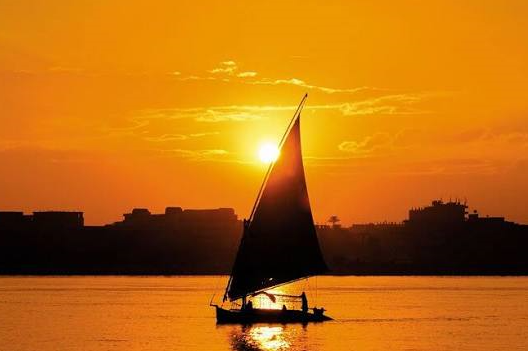
Luxury Nile cruise options have expanded significantly in recent years. Sanctuary Sun Boat IV, Oberoi Philae, and several boutique dahabiya sailing vessels (traditional wooden sailboats accommodating 6–12 passengers) offer extraordinary accommodation on the river. A dahabiya cruise, moving at the pace of the wind, stopping at riverside temples and village markets, is the finest way to experience the Nile Valley and is specifically suited to travellers who want an intimate, unhurried Egypt experience.
Sahara Desert Adventures in Egypt: The Other Egypt
Here is what many Egypt historical tour visitors miss entirely: the country that lies beyond the Nile Valley and the ancient monuments.
Egypt is approximately 96% desert. The Sahara occupies almost the entire country west of the Nile, and within that vast expanse, landscapes of extraordinary and completely unexpected beauty wait for travellers willing to leave the monument trail.
The White Desert: Egypt’s Most Dramatic Landscape
The White Desert (Sahara el Beyda) in Egypt’s Western Desert is one of the most visually extraordinary natural environments on earth. Formed by millennia of wind erosion on chalk and limestone deposits, the White Desert is studded with formations of brilliant white rock, mushroom shapes, arches, obelisks, and abstract sculptures, that glow in the desert light and turn phosphorescent under starlight.
A camping night in the White Desert, with a luxury camp set up between the chalk formations, a fire under the open sky, and the silence of the Sahara broken only by the sound of the wind, is one of Africa’s most genuinely unforgettable experiences.
Getting to the White Desert: The White Desert is accessible from the Farafra Oasis, approximately 600 kilometres southwest of Cairo. Most visitors reach it via a desert drive from Bahariya Oasis, which is 4–5 hours from Cairo by road.
White Desert activities:
- Guided jeep safari through the chalk formations
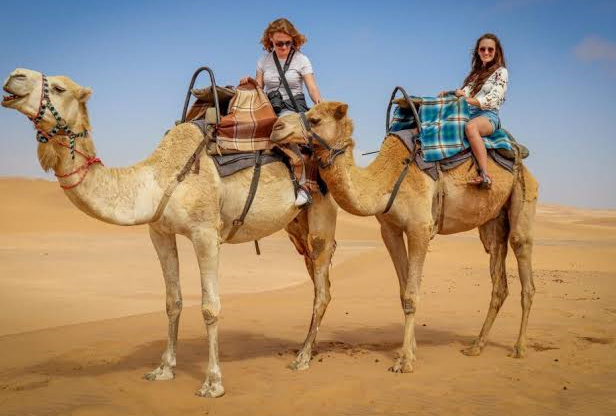
- Camel trekking between rock sculptures
- Night camping under extraordinary star skies
- Hot springs at Bahariya Oasis
- Black Desert, dark volcanic terrain contrasting dramatically with the white chalk of the main desert
Siwa Oasis: The Remote Desert Jewel
In Egypt’s far northwest, 50 kilometres from the Libyan border, Siwa Oasis is one of Africa’s most magical destinations, A genuine desert oasis, palm groves, freshwater springs, and a community of 25,000 Siwi people who maintain a distinct language and culture, Siwa offers an Egypt completely removed from the Nile Valley tourist trail.
The Temple of the Oracle of Amun at Siwa is where Alexander the Great was declared the son of Zeus Ammon in 331 BCE, a moment that defined his self-conception and his empire. The ruins of the ancient city of Aghurmi surround the temple.
Siwa’s salt lakes, particularly Dakrour Lake, are the centre of a natural health tourism tradition. The salt water and the therapeutic mud of the lake beds have drawn visitors for centuries.
The Sand Sea around Siwa, a vast dune field including some of the largest dunes in the Sahara, offers some of Africa’s finest dune experiences. Sunset 4WD safaris into the Sand Sea, climbing dunes for views across an ocean of sand that extends to the horizon, are among the most memorable experiences available in Egypt.
Combining Egypt Historical Tours and Sahara Desert Adventures
The ideal Egypt itinerary combines both dimensions, ancient monuments and desert adventure, in a sequence that uses each experience as context for the other.
Suggested 12-day Egypt Itinerary:
Days 1–3: Cairo — Pyramids of Giza, Egyptian Museum, Islamic Cairo, Khan el-Khalili Days 4–5: White Desert, Bahariya Oasis, Black Desert, White Desert overnight camp Day 6: Return to Cairo, fly to Luxor Days 7–9: Luxor — Karnak, Luxor Temple, Valley of the Kings, Hatshepsut Temple Day 10: Board Nile cruise at Luxor Days 11–12: Nile cruise to Aswan — Edfu, Kom Ombo, Aswan monuments Day 13: Day trip to Abu Simbel, depart
This itinerary covers the essential historical sites, the finest desert adventure experience, and a Nile cruise, the three defining dimensions of an Egypt visit, in a manageable two-week sequence.
Practical Planning: Explore Egypt Historical Tours and Sahara Desert Adventures
Best time to visit Egypt: October–April is the optimal travel window. Summer months (June–August) bring extreme heat, Cairo reaches 40°C+, that makes monument-visiting very demanding and desert camping genuinely dangerous. The winter months (December–February) are cool, clear, and comfortable.
Visa requirements: Most nationalities, including US, UK, EU, and Australian citizens, can obtain an Egyptian visa on arrival at Cairo International Airport. The e-visa system also allows online application before travel. Cost is approximately $25 USD.
Health: No specific vaccinations are required for Egypt. Drinking water from taps is not recommended, bottled water is the universal standard. Sun protection is critically important in summer; even in winter, Egypt’s UV levels are significant.
Currency: Egyptian Pound (EGP). USD and EUR are widely accepted at tourist sites and hotels. ATMs are available in Cairo and major cities; carry cash for desert excursions where electronic payments are not available.
Internal flights: EgyptAir connects Cairo to Luxor, Aswan, Abu Simbel, and Sharm el-Sheikh with multiple daily flights.
FAQs
Is Egypt safe for tourists?
Egypt is a well-established international tourist destination. The major historical sites and desert adventure areas are considered safe and are visited by millions of international tourists annually. Check your government’s current travel advisory before booking and follow standard travel precautions.
Can I combine Egypt with an East Africa safari?
Yes. Cairo connects to Nairobi, Addis Ababa, and Kigali with direct flights. A combined Egypt-Kenya or Egypt-Rwanda itinerary is entirely practical. See our top Kenya wildlife safaris and luxury eco-lodge tours and how to plan a Kenya safari from the USA guides for East Africa planning.</p>
What is the minimum time needed for an Egypt historical tour?
A minimum of 7 days is needed for Cairo and Luxor/Aswan. Adding the White Desert requires 2 additional days. A comprehensive Egypt itinerary covering monuments, the Nile cruise, and Sahara desert adventures comfortably fits into 12–14 days.
How do I book Egypt historical tours and desert adventures?
Contact Africa Safari Tours, our Egypt specialists design complete Egypt itineraries combining historical tours and Sahara desert adventures, coordinating all accommodation, guides, and transportation.</p>