Mountain gorillas understandably dominate the conversation when people think about primate trekking in Africa, but they’re far from the only primates to see in Africa. The continent is home to an extraordinary range of species, chimpanzees sharing roughly 98% of human DNA, striking black-and-white colobus monkeys leaping through the canopy, golden monkeys found almost nowhere else on Earth, and even lowland gorillas in the dense forests of Central Africa. This guide covers the best primates to see in Africa beyond the mountain gorilla, and where to find each one.
Chimpanzees: Our Closest Living Relatives
Chimpanzee tracking offers an experience almost as profound as gorilla trekking, often with more dynamic, visible behavior, since chimps are highly vocal, move through the canopy, and display complex social interactions that are fascinating to observe firsthand.
Kibale Forest, Uganda
Kibale Forest is widely regarded as one of the best places on the continent for chimpanzee tracking, with a high habituation success rate and excellent odds of multiple sightings in a single outing. The park also offers a “chimpanzee habituation experience,” allowing visitors to spend extended time with researchers following not-yet-fully-habituated chimp communities.
Gombe and Mahale Mountains, Tanzania
Tanzania’s Gombe Stream National Park, made famous by Jane Goodall’s decades of research, and the more remote Mahale Mountains both offer exceptional chimpanzee tracking in stunning lakeside and forest settings along Lake Tanganyika.
Golden Monkeys: A Rwanda and Uganda Specialty
Golden monkeys are a strikingly colored, endangered primate found almost exclusively in the Virunga volcanic region spanning Rwanda, Uganda, and the Democratic Republic of Congo. Trekking for golden monkeys is typically shorter and less strenuous than gorilla trekking, making it an excellent add-on activity for travelers already visiting Volcanoes National Park in Rwanda or Mgahinga Gorilla National Park in Uganda.
Colobus Monkeys: Striking and Widespread
Black-and-white colobus monkeys, with their dramatic flowing white fur and acrobatic canopy movements, are among the more visually striking primates to see in Africa, and far more widely distributed than gorillas or chimps. They’re commonly spotted in forested parks across East Africa, including Kibale Forest, Nyungwe Forest in Rwanda, and parts of Kenya’s Aberdare and Mount Kenya regions, often without requiring a dedicated trek at all.
Vervet and Patas Monkeys
More commonly seen than sought out, vervet monkeys are widespread across East and Southern Africa’s savannah regions and often encountered around camps and lodges, offering easy, low-effort primate sightings alongside the more significant trekking experiences elsewhere in your itinerary. Patas monkeys, less commonly seen, inhabit open savannah in parts of East and West Africa and are notable as the fastest-running primate species on Earth.
Mandrills and Drills: West and Central Africa’s Colorful Primates
For travelers venturing into West and Central Africa, mandrills, the world’s largest monkey species, known for their vividly colored faces, and the closely related, more endangered drills, offer a striking and very different primate experience from East Africa’s forest dwellers, typically found in the dense rainforests of Cameroon, Gabon, and surrounding countries.
Lowland Gorillas: A Rarer Cousin to the Mountain Gorilla
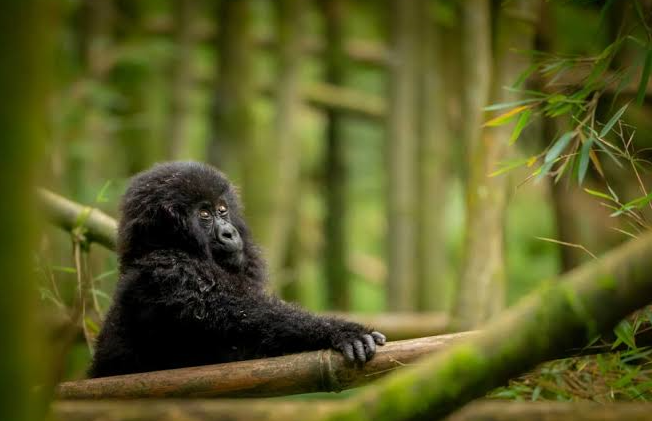
Beyond the well-known mountain gorilla, Eastern lowland gorillas represent a distinct, critically endangered subspecies found specifically in the forests of eastern Democratic Republic of Congo. Trekking for lowland gorillas offers a genuinely different experience from Uganda or Rwanda’s mountain gorilla trekking, often in more remote, less-visited terrain. For lowland gorillas and other primates, read Eastern Congo Primate Expeditions: Ultimate Lowland Gorilla Tour Guide, which covers what this specific trekking experience involves and how it differs from mountain gorilla trekking further north.
Planning a Primate-Focused Trip
If primates to see in Africa are the focus of your trip rather than a single highlight, it’s worth structuring your itinerary around a few complementary destinations rather than a single park. Combining Uganda’s Kibale Forest (chimpanzees) with Bwindi (mountain gorillas) and Mgahinga (golden monkeys) in a single trip, for example, offers an unusually complete primate experience within one country.
Tips for Primate Trekking
- Check minimum age requirements, which vary by species and park, with gorilla trekking generally stricter than chimpanzee or golden monkey trekking.
- Book permits well in advance, particularly for mountain gorilla and chimpanzee permits during peak season.
- Expect physical demands, since most primate trekking involves hiking through dense, often steep forest terrain.
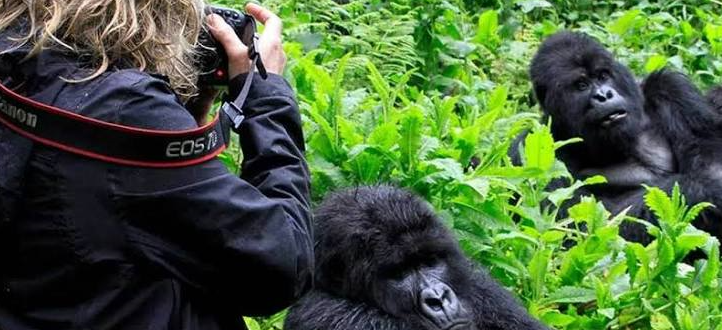
- Bring a good camera with a reasonable zoom, as many sightings occur at a respectful distance or within dense canopy cover.
For broader conservation information on Africa’s primate species and current population status, the IUCN Red List is a useful resource to check before planning a trip.
Final Thoughts
Mountain gorillas may get the spotlight, but the full range of primates to see in Africa is remarkably rich, from chimpanzees sharing our closest genetic lineage to golden monkeys found almost nowhere else on Earth, and striking colobus monkeys easily spotted without a dedicated trek. Building a trip around several of these species, rather than a single gorilla trek alone, offers one of the most rewarding wildlife experiences the continent has to offer.
Interested in building a primate-focused itinerary? Get in touch with Africa Safari Tours and we’ll help you plan a trip around the best primates to see in Africa for your interests and travel dates.