Okavango Delta and Chobe Safari: 9-Day Botswana Itinerary
Botswana rewards travelers who give it time, and a nine-day Okavango Delta and Chobe safari is long enough to properly experience the country’s two signature landscapes without rushing between them. The Okavango Delta is one of the world’s great wetland wildernesses, a maze of channels, lagoons, and palm-studded islands teeming with wildlife, best explored by mokoro canoe as much as by vehicle. Chobe National Park, by contrast, is famous for sheer numbers, one of the largest elephant populations on Earth, concentrated along the Chobe River. Together, they make an outstanding pairing, and this itinerary shows how a well-paced Okavango Delta and Chobe safari brings both together over nine days.
Why Combine the Okavango Delta and Chobe?
The Okavango Delta and Chobe National Park sit within a reasonable light-aircraft or road connection of each other in northern Botswana, making it straightforward to combine both into a single trip. The Delta offers a slower, more intimate style of safari, with mokoro canoe trips through papyrus-lined channels and walking safaris on its many islands, while Chobe delivers big, dramatic game viewing, particularly along the river where herds of elephant gather in large numbers, especially during the dry season. An Okavango Delta and Chobe safari gives you both the Delta’s quiet wilderness and Chobe’s concentrated wildlife spectacle in one trip.
Day 1–2: Arrival and the Okavango Delta
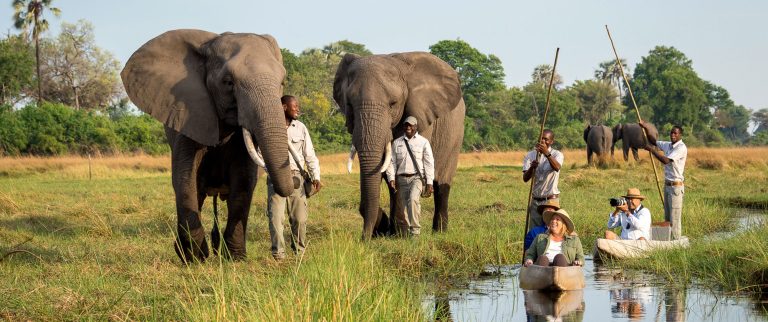
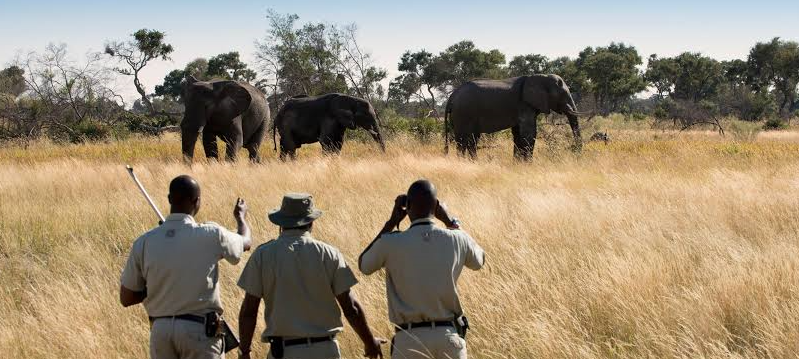
Fly into Maun, Botswana’s main safari gateway, and connect via light aircraft to a camp in the heart of the Okavango Delta. Over the following two days, explore the Delta’s flooded channels by mokoro, a traditional dugout canoe poled silently through the reeds, offering close encounters with birdlife, hippo, and elephant from water level. Guided walking safaris on the Delta’s islands add another dimension, focusing on tracking, smaller wildlife, and the ecology of this unique wetland system.
Day 3–4: Deeper into the Delta
Continue exploring the Okavango Delta from a second camp or a different concession, combining game drives, mokoro excursions, and walking safaris. The Delta’s water levels vary seasonally, and your guides will tailor activities accordingly, sometimes swapping a game drive for a longer mokoro trip when channels are full, or focusing more on walking and vehicle-based tracking during drier months. This stretch of the Okavango Delta and Chobe safari is typically the most immersive, with smaller guest numbers and a strong focus on the Delta’s ecosystem.
Day 5–6: Moremi Game Reserve
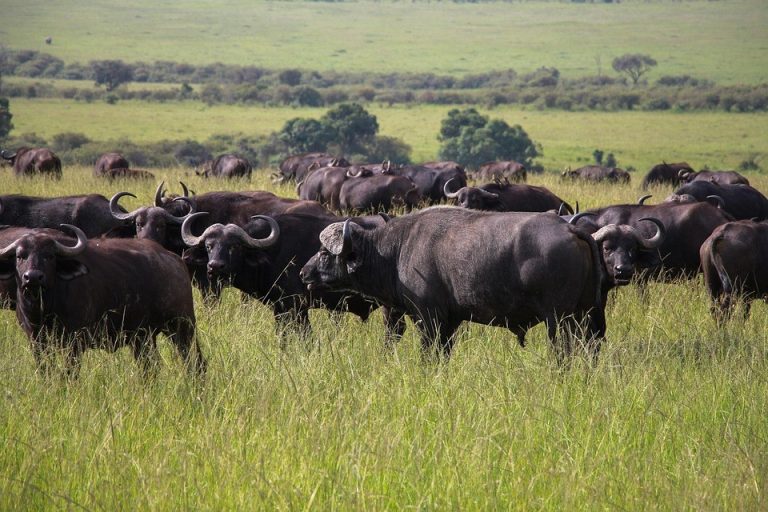
Transfer to Moremi Game Reserve, on the eastern edge of the Delta, known for excellent predator sightings alongside the wetland wildlife found further into the Delta itself. Game drives here often turn up lion, leopard, and wild dog, along with large herds of buffalo and antelope, making Moremi a strong bridge between the Delta’s water-based safari style and the more classic game drives ahead in Chobe.
Day 7–8: Chobe National Park
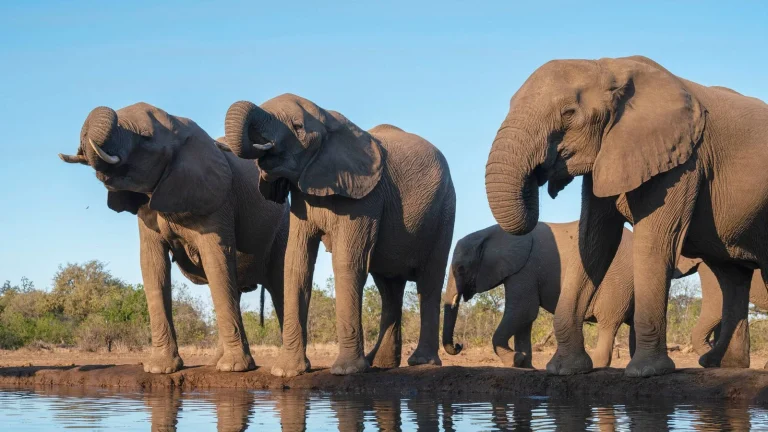
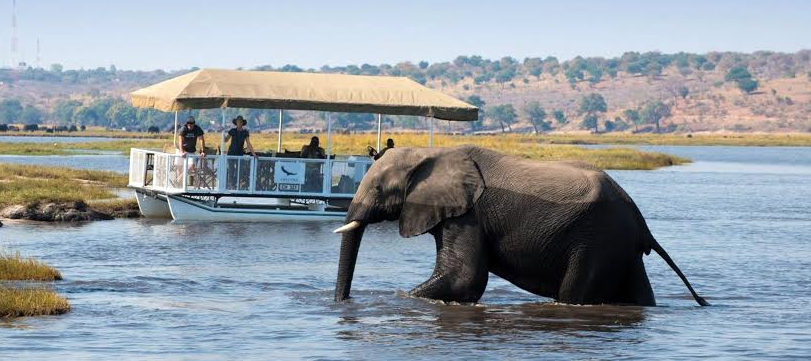
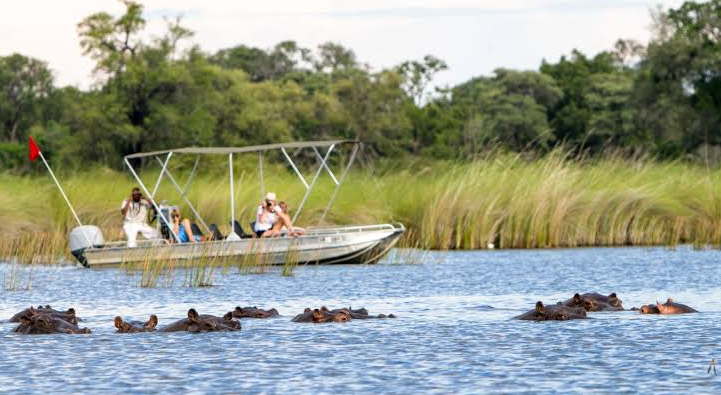
Fly or drive to Chobe National Park, home to one of Africa’s largest elephant populations, with estimates often exceeding 50,000 individuals in the region. Spend two days alternating between game drives and boat safaris along the Chobe River, where elephant, buffalo, hippo, and crocodile congregate in large numbers, especially in the dry season when the river becomes the area’s primary water source. The boat safari is a particular highlight of this leg, offering close, low-angle views of elephants drinking and swimming that are hard to match from a vehicle.
Day 9: Departure
After a final morning activity, transfer to Kasane Airport, near the borders of Botswana, Zambia, Zimbabwe, and Namibia, for your onward flight, bringing your Okavango Delta and Chobe safari to a close.
Best Time for an Okavango Delta and Chobe Safari
The dry season, from May to October, is generally considered the best time for this itinerary. Water levels in the Delta are typically higher from June through August, ideal for mokoro trips, while Chobe’s wildlife concentrations along the river peak later in the dry season, from August to October, as surrounding water sources dry up. Traveling in this general window balances both destinations well.
A Related Package Worth Considering
If you’re comparing routes through Botswana, it’s worth looking at how other itineraries structure similar terrain. Link from Ultimate 9 Day Botswana Adventure: From Salt Pans To Delta as a related package, which takes a different route through Botswana’s salt pans before reaching the Delta, and is a useful comparison if you’re deciding between itinerary styles.
Tips for Planning an Okavango Delta and Chobe Safari
- Book light aircraft transfers early, since seat availability between Delta camps and Chobe can be limited in peak season.
- Pack light and in soft-sided bags, as light aircraft typically enforce strict weight limits, often around 20kg including hand luggage.
- Confirm water levels with your operator, since Delta activities shift between mokoro, walking, and vehicle-based game drives depending on the season.
- Bring a decent zoom lens or binoculars for both the Delta’s birdlife and Chobe’s river-based elephant sightings.
For official park entry requirements and conservation information, Botswana Tourism is a useful resource to check before you travel.
Final Thoughts
An Okavango Delta and Chobe safari brings together two of Southern Africa’s most distinctive wildlife experiences: the quiet, water-based wilderness of the Delta and the sheer scale of Chobe’s elephant herds along the river. Nine days is enough time to properly settle into both, moving at a pace that lets the Delta’s slower rhythm and Chobe’s more dramatic game viewing each get the time they deserve.
Ready to plan your own route? Contact Africa Safari Tours to customize this Okavango Delta and Chobe safari around your travel dates and interests.