What the Encounter Really Feels Like
Nothing prepares you for meeting a silverback gorilla in the wild. You can read guidebooks. You can watch documentaries for years. However, none of that compares to the real moment. When a 200-kilogram silverback steps out of the mist and locks eyes with you, something inside you shifts. This guide walks you through what that moment actually feels like, from the trek through the forest to the encounter itself. It also covers how to prepare, what to expect, and why this experience changes travelers forever.
At Africa Safari Tours, we have guided countless travelers into the misty forests of Uganda and Rwanda. Every single guest describes the same thing: awe, followed by a strange, quiet peace. Let’s explore why.
Preparing for Your Gorilla Trekking Adventure
Before you can see a silverback gorilla in the wild, you need a permit. Uganda and Rwanda both issue limited daily permits. This keeps gorilla families protected from overcrowding. Therefore, booking early is essential, especially during peak season.
Your trek usually begins at dawn. Rangers brief you on safety rules first. Then, armed with walking sticks and rain jackets, you head into the forest. The terrain is steep. The vegetation is thick. Still, the anticipation makes every step feel lighter.
Most treks take between two and six hours. Meanwhile, your guides track fresh signs, like broken branches, footprints, and dung. Trackers stay ahead of the main group, radioing updates as they close in on the family. This teamwork is what makes the eventual sighting so rewarding.
The Sounds and Smells of the Rainforest
Long before you see anything, the forest speaks to you. Birds call from the canopy above. Insects hum steadily in the background. Additionally, the air smells of damp earth and crushed leaves.
As you climb higher, the atmosphere shifts. Sunlight barely reaches the forest floor. Fog clings to the vines. Your heart rate quickens, not from exhaustion, but from anticipation. You know you’re close. In fact, your guide often signals silence just moments before the first sighting.
The First Moment You See a Silverback Gorilla in the Wild
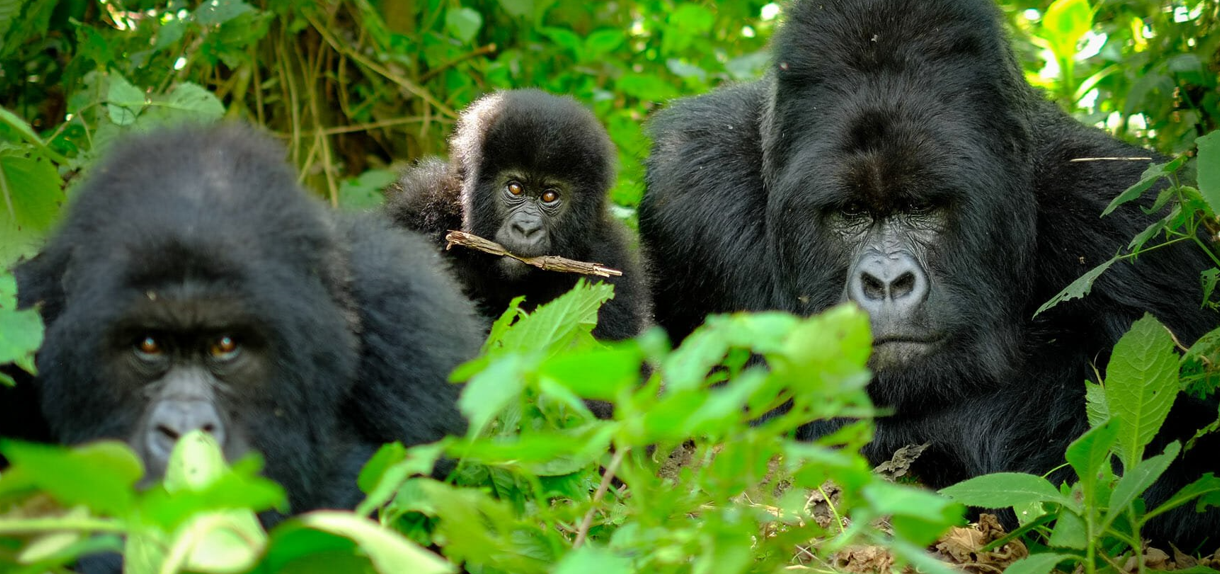
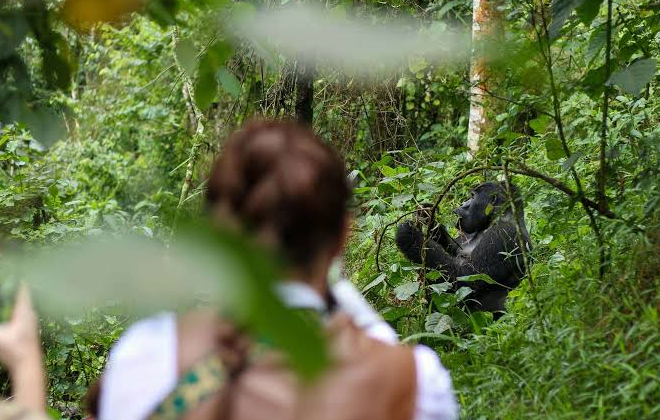
Then it happens. A rustle in the leaves. A dark shape shifts behind the foliage. Suddenly, a silverback gorilla in the wild appears just meters away. Time seems to pause completely.
His size is the first thing that strikes you. Adult silverbacks can weigh over 180 kilograms. Their chest is broad, their arms powerful, and their gaze remarkably calm. Despite their strength, wild gorillas are generally gentle around respectful visitors. Rangers keep a safe distance, and the gorillas simply continue their day, munching on stems or grooming a family member.
Many visitors say they forget to breathe. Others describe tears forming without warning. There’s no single reaction, but there’s always a reaction. Meeting a silverback gorilla in the wild feels less like wildlife viewing and more like meeting a distant, powerful relative.
Locking Eyes With a Silverback: The Emotional Impact
Eye contact with a silverback is unforgettable. His eyes are deep brown and strikingly expressive. Unlike smaller primates, he doesn’t dart away nervously. Instead, he studies you, briefly, before returning to his routine.
That brief connection often triggers something unexpected: humility. You realize how closely humans and gorillas are related, sharing roughly 98 percent of our DNA. Consequently, many travelers describe the encounter as spiritual rather than simply exciting. It’s not just about seeing an animal. It’s about recognizing kinship.
Guides encourage guests to stay quiet and move slowly. This respect matters. Gorillas read body language easily, and calm behavior keeps the entire family relaxed throughout your visit.
What Happens During Your One Hour With the Family
Once rangers confirm you’ve found the group, you get exactly one hour with them. It sounds short, but it feels infinite. Within that hour, you might see:
- Playful juveniles tumbling through the undergrowth
- Mothers cradling infants against their chests
- The silverback patrolling the group’s perimeter
- Quiet grooming sessions between family members
Photography is welcome, but many visitors put their cameras down halfway through. They choose instead to simply watch. This is often the moment when the experience becomes deeply personal rather than purely visual.
Before you know it, your guide signals that time is up. Walking away feels bittersweet. Yet most travelers leave smiling, already planning a return trip.
Why Conservation Makes This Experience Possible
Mountain gorillas were once critically endangered. Thanks to sustained conservation work, their population has slowly recovered. Organizations like the Dian Fossey Gorilla Fund and the Uganda Wildlife Authority have played a huge role in this recovery.
Trekking permits directly fund anti-poaching patrols, veterinary care, and local community programs. Therefore, every visitor who treks contributes to protecting the species. This is eco-tourism working exactly as intended: sustainable travel that benefits both wildlife and local communities.
The Rwanda Development Board also reinvests permit revenue into nearby villages. As a result, communities gain a strong incentive to protect gorillas rather than encroach on their habitat. This balance between tourism and conservation is fragile, but it works.
Tips for Your Own Silverback Gorilla Encounter
If you’re planning your first trek, keep these tips in mind:
- Book your permit at least three to six months ahead.
- Pack waterproof hiking boots and gardening gloves for thorny vegetation.
- Bring a lightweight rain jacket, even in dry season.
- Stay physically active in the weeks before your trip.
- Listen closely to your guide’s instructions at all times.
Physical fitness helps, but it isn’t mandatory. Porters are available to assist travelers of any fitness level. Meanwhile, patience matters more than speed. Some treks take thirty minutes; others take five hours. Either way, the reward is identical.
Where to See a Silverback Gorilla in the Wild
Two destinations dominate gorilla trekking: Uganda’s Bwindi Impenetrable Forest and Rwanda’s Volcanoes National Park. Both offer incredible odds of a successful sighting, often above 95 percent.
Uganda tends to offer lower permit costs, while Rwanda offers shorter, less strenuous treks. Consequently, your choice often depends on budget and fitness level. Our Uganda safari packages combine gorilla trekking with wildlife safaris in Queen Elizabeth National Park, giving you a fuller picture of East Africa’s biodiversity.
Congo’s Virunga National Park is another option, though political instability sometimes affects accessibility. For most first-time travelers, Uganda and Rwanda remain the safest, most reliable choices.
Final Thoughts: A Moment You’ll Never Forget
Seeing a silverback gorilla in the wild isn’t just a checkbox on a bucket list. It’s a profound reminder of how connected we are to the natural world. The trek is tough. The permits aren’t cheap. Nevertheless, almost every traveler says it was worth every step and every dollar.
If you’re ready to plan your own encounter, our team at Africa Safari Tours can help you choose the right park, season, and itinerary. Whether you dream of Uganda’s misty hills or Rwanda’s volcanic slopes, one thing is certain: nothing else in the natural world compares to locking eyes with a silverback gorilla in the wild.