Back ground & Classification
As a living testament to adaptation, the Eastern gorilla (Gorilla beringei) comprises two distinct subspecies: the mountain gorilla and the eastern lowland gorilla. These giants originally diverged from western gorillas roughly 1.75 million years ago; however, shifting climates later isolated the two eastern groups from each other approximately 400,000 years ago.
While they still share a close genetic bond due to this relatively recent split, their physical and behavioral differences vividly demonstrate how unique environments shape survival. Consequently, protecting these great apes is vital, as observing them offers a rare, front-row seat to evolution in motion.
Body Seize and structure
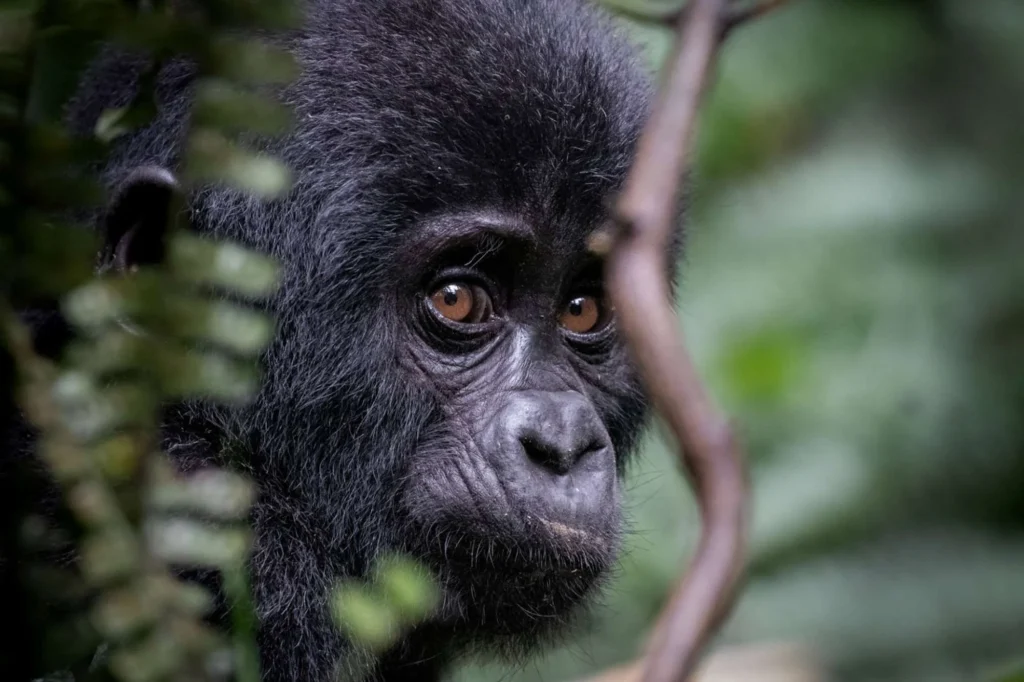
Dominating the lush rainforests, Eastern lowland gorillas stand as the largest of all subspecies, with adult males often exceeding 180kg. Their nutrient-rich habitat offers an abundant variety of fruits, which directly fuels their impressive physical scale. In contrast, mountain gorillas typically average around 150kg; however, they possess a more compact and muscular frame specifically adapted for survival in high-altitude environments.
This physical divergence beautifully illustrates environmental adaptation. For instance, lowland gorillas develop longer arms to skillfully navigate tall forest canopies. Conversely, mountain gorillas utilize a stockier build to maintain stability while traversing steep, rugged slopes and dense vegetation. By protecting these distinct habitats, we ensure that both the arboreal specialists of the lowlands and the mountain-climbing powerhouses continue to thrive in their respective ancestral lands.
Diet & Feeding Behavior
Survival in the wild depends largely on dietary adaptation, and the feeding habits of these two subspecies highlight the richness of their respective habitats. Mountain gorillas primarily act as specialized herbivores, relying heavily on a diet of leaves, stems, shoots, and bark. Because fruit is scarce in high-altitude forests, these primates must consume vast quantities of fibrous vegetation to meet their nutritional needs. Consequently, they spend a significant portion of their day feeding, utilizing highly efficient digestive systems to process tough plant material into energy.
In contrast, Eastern lowland gorillas benefit from the lush biodiversity of the lowlands, where they enjoy a much more diverse menu. Fruit serves as a primary energy source whenever available, providing a high-calorie boost that likely supports their larger physical stature. Furthermore, these gorillas frequently supplement their diet with insects like ants and termites. This additional protein source not only diversifies their intake but also reflects the ecological abundance of the lowland rainforests. By understanding these unique dietary requirements, we can better implement eco-conservative strategies that protect the specific flora and fauna each gorilla subspecies needs to survive.
Social Behavior
Both mountain and lowland gorillas thrive within cohesive family units led by a dominant silverback. These groups, consisting of adult females, their offspring, and sometimes subordinate males, depend on powerful social bonds to ensure group protection and survival. However, their daily routines diverge significantly based on their unique habitats. In the sprawling lowland forests, food sources like seasonal fruits are often widely dispersed. Consequently, Eastern lowland gorillas exhibit a more flexible group structure, frequently traveling longer distances and spreading out to forage. This increased mobility allows them to efficiently navigate a variety of terrains, including swampy areas and tall forest canopies.
In contrast, mountain gorillas benefit from the consistent abundance of high-altitude vegetation. Because food is readily available in their immediate surroundings, they typically move shorter distances and maintain much tighter group cohesion throughout the day. Furthermore, mountain gorillas are primarily terrestrial, spending the majority of their time on the ground. This constant physical proximity fosters frequent social interactions and “close-quarters” learning, which strengthens the group’s internal stability. By protecting these specialized social environments, conservationists can ensure that both the agile climbers of the lowland.
Reproduction & Survival
Both gorilla subspecies follow a polygynous system, where a dominant silverback mates with multiple females to ensure troop stability and protection. However, environmental factors significantly impact their reproductive success. For instance, mountain gorillas have achieved steady population growth thanks to intensive conservation and closely monitored habitats.
In contrast, Eastern lowland gorillas face a more precarious future. Habitat loss and human conflict frequently disrupt their groups, making successful reproduction and infant survival much more difficult. Consequently, expanding protective measures is essential to secure the survival of these vulnerable lowland populations.